How much water can a water tank tricycle carry?
As a seasoned supplier of water tank tricycles, I often get asked the question: "How much water can a water tank tricycle carry?" This seemingly simple query actually involves a multitude of factors that determine the water - carrying capacity of these versatile vehicles. In this blog, I'll delve into the science and practicalities behind the water - carrying capacity of water tank tricycles.
Factors Affecting Water - Carrying Capacity
Tank Size
The most obvious factor is the size of the water tank installed on the tricycle. Tanks come in various shapes and sizes, and the volume they can hold directly impacts the amount of water the tricycle can carry. Smaller tanks might have a capacity of around 100 - 200 liters, which are suitable for tasks like watering small gardens or providing water for local events in a limited area. On the other hand, larger tanks can hold up to 1000 liters or more. These are typically used for more substantial applications such as agricultural irrigation over larger fields or supplying water to construction sites.
Tricycle Design and Load - Bearing Capacity
The design of the tricycle itself plays a crucial role. The frame, wheels, and suspension system must be able to support the weight of the water - filled tank. A well - designed tricycle with a sturdy frame and appropriate suspension can handle a heavier load. For instance, a tricycle with a reinforced frame and high - quality wheels can carry a larger water tank compared to a basic model. The load - bearing capacity is also affected by the distribution of weight. If the tank is not properly positioned on the tricycle, it can cause instability, which limits the amount of water that can be safely carried.
Local Regulations
In many regions, there are regulations regarding the maximum load that a tricycle can carry on public roads. These regulations are in place to ensure safety and prevent damage to the road infrastructure. As a supplier, we need to ensure that our water tank tricycles comply with these regulations. This might mean limiting the size of the tank or using lighter - weight materials to keep the overall weight within the legal limits.
Common Water - Carrying Capacities
Let's take a look at some common water - carrying capacities based on different types of water tank tricycles:
Small - Scale Domestic Use
For small - scale domestic use, such as watering a backyard garden or a small orchard, water tank tricycles usually have a capacity of 100 - 300 liters. These tricycles are lightweight and easy to maneuver, making them ideal for home use. They are often powered by a simple pedal system or a small electric motor, which is sufficient for short - distance transportation.
Medium - Scale Commercial Use
In medium - scale commercial applications, like supplying water to small businesses or for local community events, tricycles with a capacity of 300 - 600 liters are more common. These tricycles may be powered by gasoline or electric motors, providing more power for longer distances. They are also equipped with better suspension systems to handle the increased weight.
Large - Scale Industrial and Agricultural Use
For large - scale industrial and agricultural use, such as irrigating large fields or supplying water to construction sites, water tank tricycles can have a capacity of 600 liters or more. These tricycles are built with heavy - duty frames and powerful engines to handle the large volume of water. They often have additional features like high - pressure pumps for efficient water distribution.


Applications and the Need for Different Capacities
The choice of water - carrying capacity depends on the specific application. For example, in the agricultural sector, a small farm with a few acres of land may only need a tricycle with a 300 - liter tank for occasional watering. However, a large - scale farm with extensive fields may require a tricycle with a 1000 - liter tank or more to ensure efficient irrigation.
In the construction industry, water is needed for dust suppression and concrete mixing. A construction site with a small area may be served by a tricycle with a 500 - liter tank, while a large - scale construction project may require a tricycle with a capacity of 800 liters or more.
Our Range of Water Tank Tricycles
As a supplier, we offer a wide range of water tank tricycles with different capacities to meet the diverse needs of our customers. Whether you need a small - capacity tricycle for domestic use or a large - capacity one for industrial applications, we have the right solution for you.
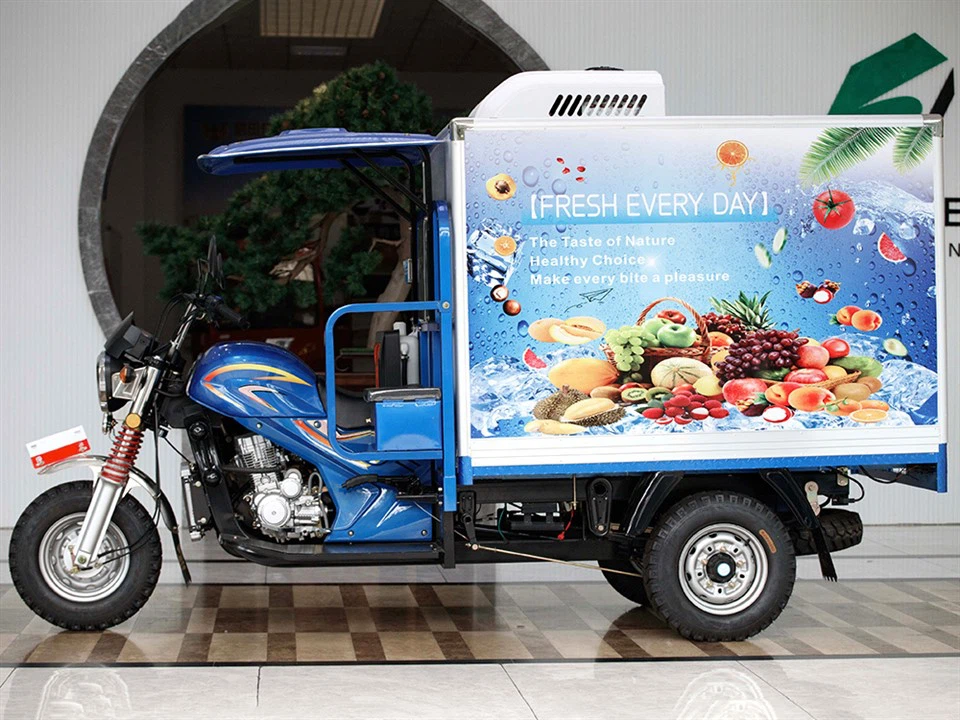
In addition to water tank tricycles, we also supply other types of specialized tricycles. For example, our Electric Refrigerated Three - wheeled Truck is perfect for transporting perishable goods in a refrigerated environment. Our Trike Food Cart is a great option for food vendors looking for a mobile and cost - effective solution. And our Garbage Collection Tricycle is designed to efficiently collect and transport garbage.
Why Choose Our Water Tank Tricycles?
Our water tank tricycles are designed with quality and functionality in mind. We use high - quality materials to ensure the durability of the tank and the tricycle frame. Our tanks are made of corrosion - resistant materials to prevent rust and damage from the water. The tricycles are also equipped with reliable engines or motors for smooth operation.
We also provide excellent after - sales service. Our team of experts is always available to answer your questions, provide technical support, and offer maintenance advice. We understand that every customer has unique needs, and we are committed to providing customized solutions to meet those needs.
Contact Us for Procurement
If you are interested in purchasing a water tank tricycle or any of our other specialized tricycles, we encourage you to get in touch with us. We can provide you with detailed information about our products, including specifications, prices, and delivery options. Our sales team is ready to assist you in finding the right tricycle for your specific requirements. Whether you are a small - scale farmer, a construction company, or a food vendor, we have the perfect tricycle for you.
References
- "Transportation Engineering Handbook": This handbook provides in - depth knowledge about vehicle design and load - bearing capacities, which was useful in understanding the engineering aspects of water tank tricycles.
- "Agricultural Irrigation Best Practices": A guide that helped in understanding the water requirements for different agricultural applications and how they relate to the water - carrying capacity of tricycles.
- "Local Traffic Regulations Compilation": This document was essential in understanding the legal limitations on the load that water tank tricycles can carry on public roads.