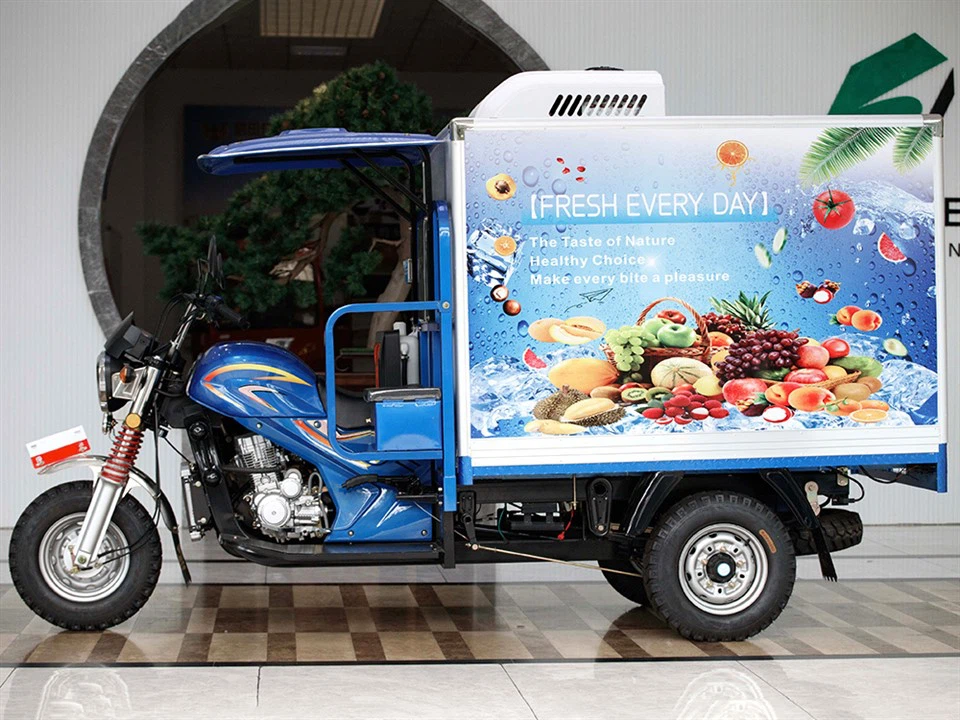
Hey there! As a supplier of gasoline tricycles, I often get asked about various technical aspects of these nifty vehicles. One question that pops up quite frequently is, "What is the turning radius of a gasoline tricycle?" Well, let's dive right into it and find out!
First off, let's understand what the turning radius actually means. The turning radius is the smallest circle a vehicle can make when it's doing a full turn. For gasoline tricycles, this measurement is super important. It determines how easily the tricycle can maneuver in tight spaces, like narrow alleys or crowded marketplaces.
The turning radius of a gasoline tricycle can vary quite a bit. It depends on several factors, such as the design of the tricycle, the size of its wheels, and the length of its wheelbase.


Design of the Tricycle
The way a gasoline tricycle is designed plays a huge role in its turning radius. Some tricycles are built for specific purposes, like carrying heavy loads or for use on farms. For instance, our Farm Tricycle is designed with durability and functionality in mind. It has a sturdy frame and a relatively wide wheelbase to support heavy agricultural equipment. However, this wider wheelbase can result in a larger turning radius compared to a more compact tricycle.
On the other hand, tricycles designed for urban use, like our Motorized Cargo Tricycle, are often more compact. They are built to navigate through busy city streets and tight corners. These tricycles usually have a shorter wheelbase and a more agile steering system, which allows for a smaller turning radius. This means they can make U-turns and navigate through traffic with ease.
Wheel Size
The size of the wheels on a gasoline tricycle also affects its turning radius. Larger wheels generally require more space to turn. This is because the circumference of a larger wheel is greater, so it covers more distance in one rotation. For example, a tricycle with big, chunky wheels might have a larger turning radius compared to one with smaller wheels.
However, larger wheels also have their advantages. They can provide better stability and traction, especially on rough or uneven terrain. Our Heavy Duty Tricycle for Adults comes with larger wheels to handle heavy loads and tough conditions. But you need to keep in mind that the turning radius might be a bit larger.
Wheelbase Length
The wheelbase, which is the distance between the front and rear axles of the tricycle, is another crucial factor. A longer wheelbase typically results in a larger turning radius. This is because the tricycle has to cover a greater distance to complete a turn.
For example, if you're using a tricycle for long - distance hauling, a longer wheelbase can provide better stability and a smoother ride. But when it comes to tight turns, you might find it a bit more challenging.
So, what's the typical turning radius of a gasoline tricycle? Well, it can range anywhere from about 2 meters to 5 meters. Compact urban tricycles usually have a turning radius on the lower end of this range, around 2 - 3 meters. This allows them to zip through narrow streets and make sharp turns.
Farm tricycles and heavy - duty tricycles, on the other hand, might have a turning radius of 3 - 5 meters. This is due to their larger size and wider wheelbase, which are designed to handle heavy loads and rough terrain.
Now, why is knowing the turning radius so important? If you're planning to use a gasoline tricycle for a specific purpose, like delivering goods in a crowded city or working on a farm, the turning radius can make or break your experience.
In a city environment, a tricycle with a small turning radius can save you a lot of time and hassle. You won't have to worry about making multiple attempts to turn around in a tight space. You can quickly navigate through traffic and reach your destination faster.
On a farm, a tricycle with a reasonable turning radius can help you move around easily between crops and equipment. You can make efficient use of the available space and get your work done more effectively.
As a supplier, we understand the importance of the turning radius for our customers. That's why we offer a variety of gasoline tricycles with different turning radii to suit different needs. Whether you need a compact tricycle for urban use or a heavy - duty one for farm work, we've got you covered.
If you're in the market for a gasoline tricycle and want to know more about the turning radius of our products, or if you have any other questions, don't hesitate to reach out. We're here to help you find the perfect tricycle for your needs. Whether you're a small business owner looking for a reliable delivery vehicle or a farmer in need of a sturdy workhorse, we can provide you with the information and support you need.
So, go ahead and explore our range of Farm Tricycle, Motorized Cargo Tricycle, and Heavy Duty Tricycle for Adults. And if you're ready to make a purchase or just want to have a chat about your requirements, get in touch with us. We're eager to start a conversation and help you make the right choice.
References
- Automotive Engineering Handbook: A comprehensive guide on vehicle design and performance, which provides in - depth information on factors affecting turning radius.
- Gasoline Tricycle Manufacturer's Manuals: These manuals offer specific details about the turning radius of different tricycle models.