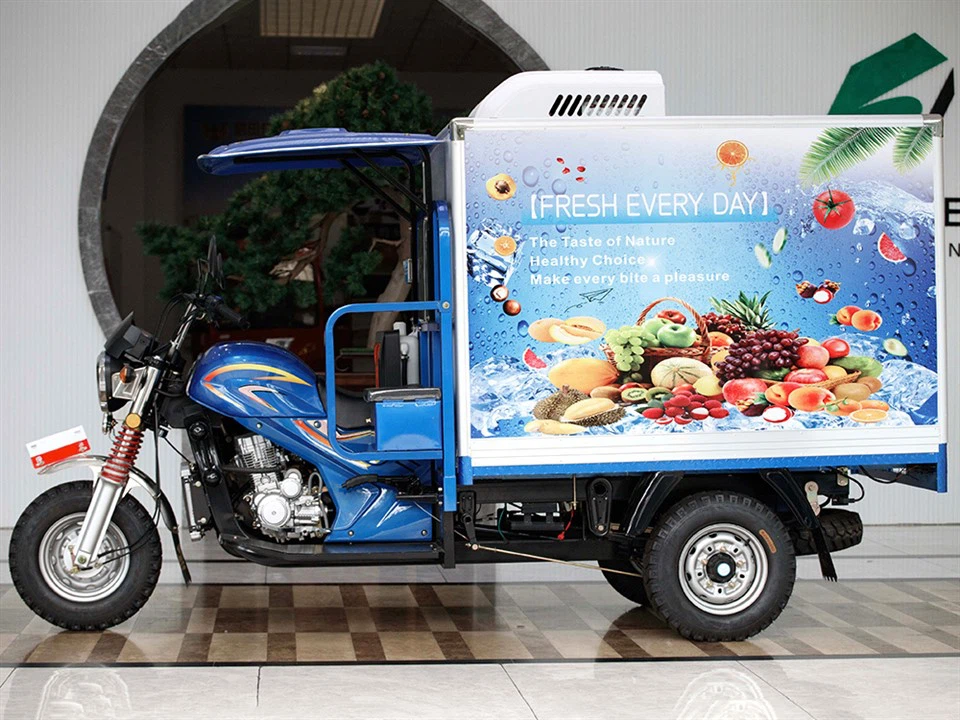
The cooling rate of a refrigeration system in a tricycle is a crucial factor that determines its efficiency and effectiveness in preserving perishable goods. As a supplier of Refrigerated Tricycles, I have witnessed firsthand the importance of understanding and optimizing this parameter. In this blog post, I will delve into the concept of cooling rate, explore the factors that influence it, and discuss how we ensure our tricycles deliver exceptional cooling performance.
Understanding Cooling Rate
The cooling rate refers to the speed at which the temperature inside the refrigerated compartment of the tricycle decreases. It is typically measured in degrees Celsius per unit of time, such as °C/min. A higher cooling rate means that the system can quickly bring the temperature down to the desired level, which is essential for maintaining the quality and safety of perishable items like food, medicine, and flowers.
Factors Influencing Cooling Rate
Several factors can affect the cooling rate of a refrigeration system in a tricycle. Let's take a closer look at some of the most significant ones:
- Compressor Capacity: The compressor is the heart of the refrigeration system. It pumps the refrigerant through the system, compressing it to increase its temperature and pressure. A more powerful compressor can circulate the refrigerant more quickly, resulting in a higher cooling rate. At our company, we carefully select compressors with appropriate capacities based on the size and requirements of the refrigerated compartment.
- Insulation Quality: The insulation of the refrigerated compartment plays a vital role in reducing heat transfer from the outside environment. High-quality insulation materials, such as polyurethane foam, can effectively minimize heat infiltration, allowing the refrigeration system to work more efficiently. We use advanced insulation techniques and materials in our tricycles to ensure maximum thermal efficiency and a faster cooling rate.
- Refrigerant Type and Charge: The type of refrigerant used in the system and the amount of refrigerant charge can significantly impact the cooling performance. Different refrigerants have different thermodynamic properties, and choosing the right one is crucial for achieving optimal cooling. Additionally, an appropriate refrigerant charge ensures that the system operates at its peak efficiency. Our technicians are trained to handle refrigerants safely and accurately, ensuring the correct charge for each tricycle.
- Airflow and Ventilation: Proper airflow and ventilation within the refrigerated compartment are essential for distributing the cold air evenly. This helps to maintain a consistent temperature throughout the space and improves the cooling rate. We design our tricycles with well-placed vents and fans to ensure efficient airflow, preventing hot spots and ensuring that the products are cooled uniformly.
- Ambient Temperature and Humidity: The ambient temperature and humidity can have a significant impact on the cooling rate. In hot and humid conditions, the refrigeration system has to work harder to remove the heat and moisture from the compartment. Our tricycles are designed to operate effectively in a wide range of environmental conditions, but extreme temperatures and humidity levels can still affect the cooling performance. We provide our customers with guidelines on how to optimize the operation of the tricycle in different climates to ensure consistent cooling.
Our Approach to Ensuring High Cooling Rates
As a leading supplier of Refrigerated Tricycles, we are committed to providing our customers with products that offer exceptional cooling performance. Here are some of the steps we take to ensure high cooling rates in our tricycles:
- Advanced Technology and Design: We invest in the latest refrigeration technology and design our tricycles to maximize cooling efficiency. Our engineers use computer-aided design (CAD) software to optimize the layout of the refrigeration system, ensuring that all components work together seamlessly.
- Quality Components: We source high-quality components from reputable suppliers to ensure the reliability and performance of our tricycles. From the compressor to the insulation materials, every part is carefully selected to meet our strict quality standards.
- Rigorous Testing: Before delivering our tricycles to customers, we subject them to rigorous testing to ensure that they meet our performance specifications. We test the cooling rate under various conditions to verify that the tricycle can quickly and effectively cool the refrigerated compartment to the desired temperature.
- Customization Options: We understand that different customers have different requirements, so we offer customization options for our tricycles. Whether you need a specific size, cooling capacity, or additional features, our team can work with you to design a tricycle that meets your exact needs.
Applications of Our Refrigerated Tricycles
Our Refrigerated Tricycles are widely used in various industries, including food delivery, medicine transportation, and floral distribution. Here are some examples of how our tricycles are being used:
- Food Delivery: Our tricycles are ideal for delivering fresh food, beverages, and frozen products. The high cooling rate ensures that the food remains fresh and safe during transportation, even in hot weather. Many food delivery companies rely on our tricycles to provide their customers with high-quality products.
- Medicine Transportation: The transportation of medicines requires strict temperature control to ensure their efficacy and safety. Our tricycles are equipped with precise temperature monitoring systems to maintain the required temperature range, making them suitable for transporting vaccines, drugs, and other medical supplies.
- Floral Distribution: Flowers are delicate and require a cool environment to stay fresh. Our tricycles can provide the necessary cooling to preserve the beauty and freshness of flowers during transportation, ensuring that they reach their destination in perfect condition.
Conclusion
The cooling rate of the refrigeration system in a tricycle is a critical factor that determines its performance and suitability for various applications. By understanding the factors that influence the cooling rate and taking appropriate measures to optimize it, we can ensure that our Refrigerated Tricycles deliver exceptional cooling performance. Whether you are in the food delivery, medicine transportation, or floral distribution industry, our tricycles can provide you with a reliable and efficient solution for transporting perishable goods.
If you are interested in learning more about our Refrigerated Tricycles or would like to discuss your specific requirements, please feel free to contact us. We look forward to working with you to find the perfect solution for your business.
In addition to our Refrigerated Tricycles, we also offer a range of other special needs tricycles, such as Garbage Collection Tricycle, Water Tank Tricycle, and Ambulance Tricycle. These tricycles are designed to meet the unique needs of different industries and applications.


References
- ASHRAE Handbook - Refrigeration. American Society of Heating, Refrigerating and Air-Conditioning Engineers.
- Refrigeration and Air Conditioning Technology. William C. Whitman, William M. Johnson, John Tomczyk, and Eugene Silberstein.
- Principles of Refrigeration. R. C. Downing.