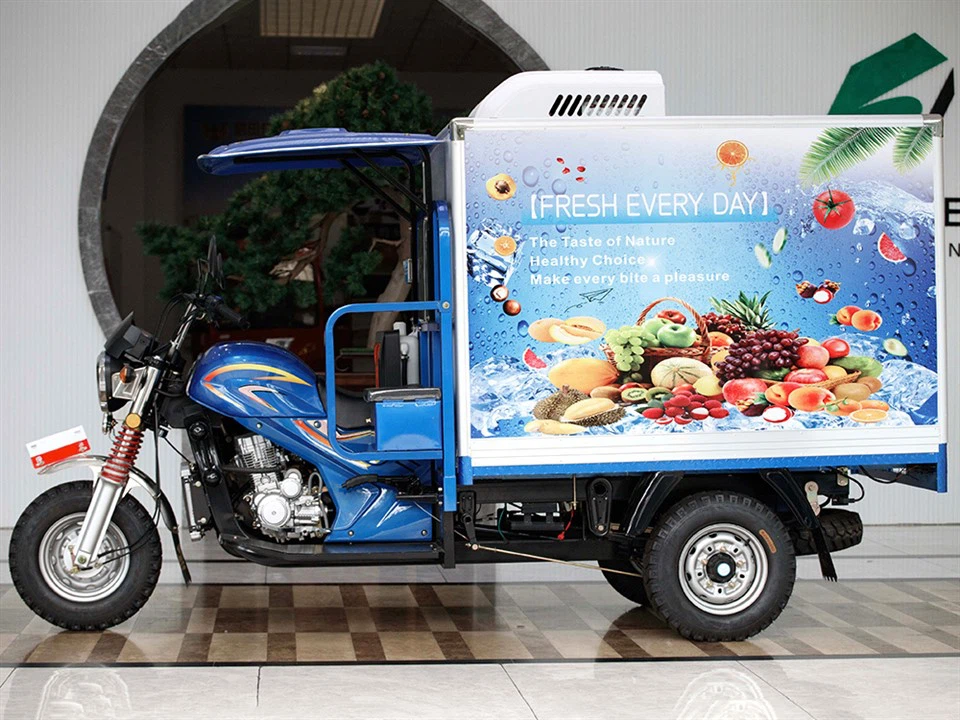
As a leading heavy-duty tricycle supplier, I've fielded numerous inquiries about the torque of electric heavy-duty tricycle motors. Torque, a fundamental concept in the operation of these robust vehicles, is pivotal to understanding their performance capabilities.
What is Torque?
In physics, torque (often denoted as τ) is a measure of the force that can cause an object to rotate about an axis. It is the rotational equivalent of linear force. The formula for torque is τ = r × F × sin(θ), where r is the distance from the axis of rotation to the point where the force is applied, F is the magnitude of the force, and θ is the angle between the force vector and the vector from the axis of rotation to the point of application.
In the context of an electric heavy-duty tricycle motor, torque is what makes the wheels turn and the tricycle move. It is the force that allows the tricycle to accelerate, climb hills, and carry heavy loads. A higher torque motor can provide more power to the wheels, enabling the tricycle to handle challenging tasks with ease.
Importance of Torque in Electric Heavy Duty Tricycles
For heavy-duty tricycles, torque is of utmost importance for several reasons. First and foremost, these tricycles are designed to carry substantial loads, whether it's commercial cargo or heavy equipment. A motor with sufficient torque ensures that the tricycle can start moving smoothly even when fully loaded. Without adequate torque, the tricycle may struggle to overcome the initial inertia, leading to slow acceleration and potential overheating of the motor.
Secondly, torque plays a crucial role in climbing hills. When ascending an incline, the tricycle has to work against gravity, which requires additional power. A high-torque motor can provide the necessary force to maintain a steady speed and prevent the tricycle from stalling. This is especially important for tricycles used in hilly areas or for applications that involve frequent inclines.
Another significant aspect is the ability to traverse rough terrain. Heavy-duty tricycles often operate in industrial sites, construction areas, or off-road environments where the ground may be uneven or slippery. A motor with high torque can help the tricycle maintain traction and navigate through such challenging conditions. It can provide the extra power needed to overcome obstacles and keep the tricycle moving forward.
Factors Affecting Torque in Electric Motors
Several factors influence the torque output of an electric heavy-duty tricycle motor. One of the primary factors is the motor's design and construction. The number of windings in the motor, the strength of the magnets, and the overall efficiency of the motor all affect its torque production. Motors with more windings generally have a higher torque output, as they can generate a stronger magnetic field.
The voltage supplied to the motor is also a critical factor. Increasing the voltage can increase the current flowing through the motor, which in turn increases the torque. However, it's important to note that there are limits to how much voltage can be applied safely, as excessive voltage can damage the motor.
The load on the tricycle also affects the torque requirements. As the load increases, the motor has to work harder to maintain the same speed, which requires more torque. Therefore, when selecting a motor for a heavy-duty tricycle, it's essential to consider the maximum load that the tricycle will be expected to carry.
Measuring Torque
Torque is typically measured in units of Newton-meters (N·m) in the International System of Units (SI). In the United States, foot-pounds (ft·lb) are also commonly used. To measure the torque of an electric motor, specialized equipment such as a torque sensor or a dynamometer is required. These devices can accurately measure the rotational force exerted by the motor and provide valuable data for motor performance analysis.
Torque and Speed Relationship
In electric motors, there is an inverse relationship between torque and speed. As the speed of the motor increases, the torque output generally decreases, and vice versa. This relationship is governed by the motor's characteristics and the load it is driving. For heavy-duty tricycles, it's important to find a balance between torque and speed to ensure optimal performance.
At low speeds, such as when starting from a stop or climbing a hill, a high-torque output is required to overcome the resistance. As the tricycle gains speed and the load becomes more manageable, the motor can operate at a higher speed with a lower torque output. This is where the efficiency of the motor design becomes crucial, as a well-designed motor can provide a smooth transition between high-torque, low-speed operation and low-torque, high-speed operation.
Our Offerings
As a heavy-duty tricycle supplier, we understand the importance of torque in the performance of our vehicles. That's why we offer a wide range of tricycles equipped with high-torque electric motors to meet the diverse needs of our customers. Whether you're looking for a Cabin Motor Tricycle for transporting passengers in all weather conditions, a Cargo Motor Tricycle for commercial hauling, or a Windshield Tricycle for outdoor work, our tricycles are designed to deliver reliable performance.


Our tricycles are powered by advanced electric motors that are engineered to provide high torque at low speeds, ensuring smooth acceleration and excellent hill-climbing ability. We also offer customizable options to meet specific requirements, such as different battery capacities, load ratings, and speed settings.
Contact for Procurement
If you're in the market for a heavy-duty tricycle and have questions about torque or any other aspect of our products, we're here to help. Our team of experts can provide you with detailed information, technical specifications, and pricing options. We're committed to providing the highest quality tricycles and exceptional customer service. Contact us today to start your procurement process and find the perfect heavy-duty tricycle for your needs.
References
- Kromer, K. H., Grandjean, E., & Kroemer, E. B. (2016). Ergonomics: How to Design for Ease and Efficiency. Routledge.
- Chapman, A. J. (2017). Electric Motor Handbook. Newnes.
- Wilson, D. G., & Papadopoulos, J. M. (2004). Bicycling Science. MIT Press.