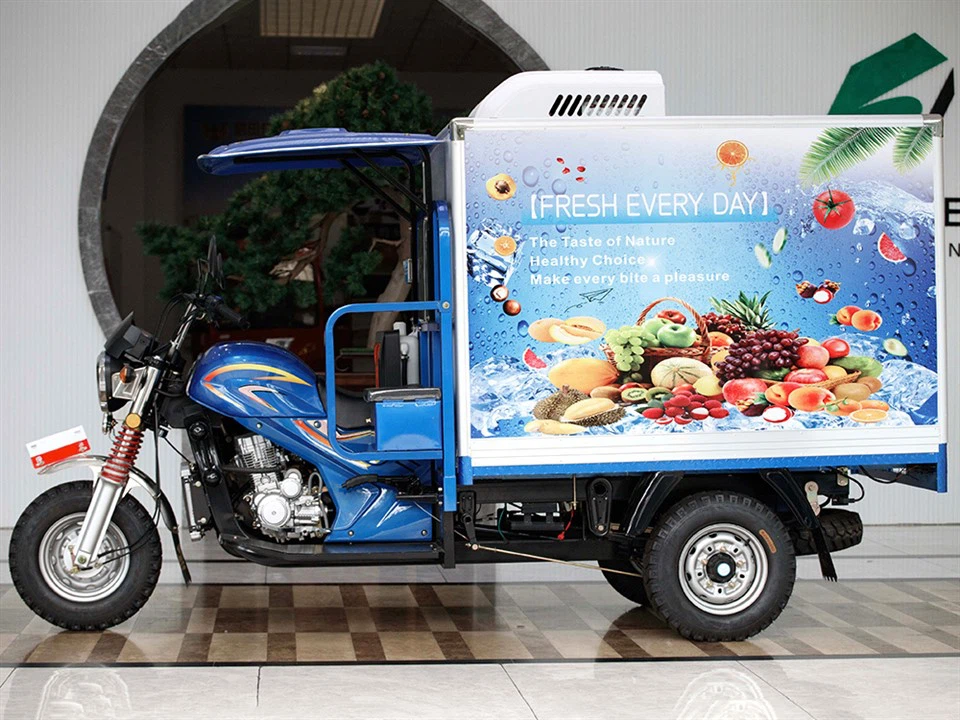
Can the refrigerated tricycle be used for transporting medical supplies?
In the realm of medical supply transportation, the choice of vehicle is crucial. It needs to ensure the safety, integrity, and temperature - controlled environment of the medical products being moved. As a supplier of Refrigerated Tricycle, I have often been asked whether our refrigerated tricycles can be used for this purpose. In this blog, I will explore the viability of using refrigerated tricycles for transporting medical supplies from multiple aspects.
Advantages of Refrigerated Tricycles for Medical Supply Transport
Temperature Control
One of the most significant requirements for transporting medical supplies is maintaining a stable temperature. Many medical products, such as vaccines, certain medications, and blood products, are highly sensitive to temperature changes. Our refrigerated tricycles are equipped with advanced refrigeration systems. These systems can be precisely adjusted to meet the specific temperature requirements of different medical supplies. For example, vaccines usually need to be stored at a temperature between 2 - 8 degrees Celsius. The refrigeration unit on our tricycles can maintain this temperature range consistently, even in varying external environmental conditions.
Maneuverability
In urban areas or places with narrow streets and congested traffic, large vehicles may face difficulties in reaching their destinations quickly. Refrigerated tricycles, on the other hand, are extremely maneuverable. They can easily navigate through small alleys, crowded marketplaces, and areas with limited parking space. This makes them ideal for delivering medical supplies to small clinics, rural health centers, or areas that are hard - to - reach for larger trucks. For instance, in some old city neighborhoods where the roads are very narrow, a refrigerated tricycle can make its way through and deliver the necessary medical supplies in a timely manner.
Cost - Effectiveness
Compared to large refrigerated trucks, refrigerated tricycles have a much lower purchase cost. They also consume less fuel or electricity, resulting in lower operating costs. For small - scale medical facilities or organizations with limited budgets, using refrigerated tricycles for transporting medical supplies can be a cost - effective solution. Additionally, the maintenance cost of tricycles is relatively low, which further reduces the overall cost of medical supply transportation.


Environmental Friendliness
With the increasing emphasis on environmental protection, many medical institutions are looking for more sustainable transportation options. Refrigerated tricycles, especially those powered by electricity, produce zero emissions during operation. This not only helps to reduce the carbon footprint of medical supply transportation but also aligns with the green initiatives of many healthcare organizations.
Challenges and Solutions
Limited Capacity
One of the main challenges of using refrigerated tricycles for medical supply transport is their limited capacity. They can carry a relatively small amount of medical supplies compared to large trucks. However, this limitation can be mitigated by proper planning and route optimization. For example, for a network of small clinics in a local area, a well - planned delivery route can ensure that the tricycle makes multiple stops and delivers the required supplies to each clinic without overloading. Also, for larger - scale medical supply needs, a fleet of refrigerated tricycles can be used in combination to meet the demand.
Long - Distance Transport
Refrigerated tricycles are more suitable for short - to - medium - distance transportation. For long - distance transport, factors such as battery life (for electric tricycles) and the need for continuous temperature control over an extended period can be challenging. To address this, we can develop tricycles with larger battery capacities or more efficient fuel - powered engines. Additionally, installing backup power sources or recharge points along the long - distance routes can ensure the continuous operation of the refrigeration system.
Comparison with Other Special - Purpose Tricycles
When considering special - purpose tricycles, there are other types like Garbage Collection Tricycle and Water Tank Tricycle. While garbage collection tricycles are designed for waste management and water tank tricycles are used for water delivery, refrigerated tricycles have a very specific function related to temperature - controlled transportation. The refrigeration technology used in our tricycles is far more sophisticated than what is required for a garbage collection or water delivery tricycle. The insulation materials, refrigeration units, and temperature monitoring systems are all tailored to meet the strict requirements of medical supply transport.
Conclusion and Call to Action
In conclusion, refrigerated tricycles have great potential for transporting medical supplies. Their advantages in temperature control, maneuverability, cost - effectiveness, and environmental friendliness make them a viable option, especially for local and short - to - medium - distance medical supply delivery. Although there are some challenges, with proper solutions and continuous technological improvements, these can be overcome.
If you are a medical institution, a pharmacy, or an organization involved in medical supply management and are interested in exploring the use of refrigerated tricycles for your transportation needs, I encourage you to contact us. We can provide you with detailed product information, customized solutions, and support to ensure that our refrigerated tricycles meet your specific requirements. Let's work together to improve the efficiency and safety of medical supply transportation.
References
- World Health Organization. Guidelines for the storage and transport of vaccines.
- Journal of Medical Logistics. Studies on cost - effective medical supply transportation.
- Environmental Protection Agency. Reports on sustainable transportation in the healthcare sector.