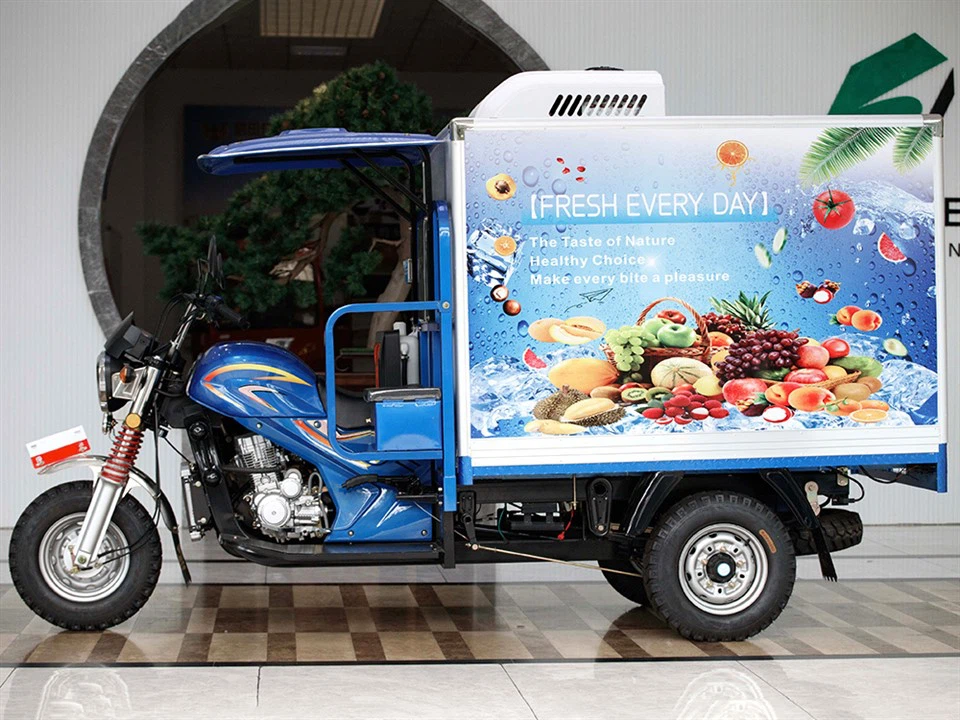
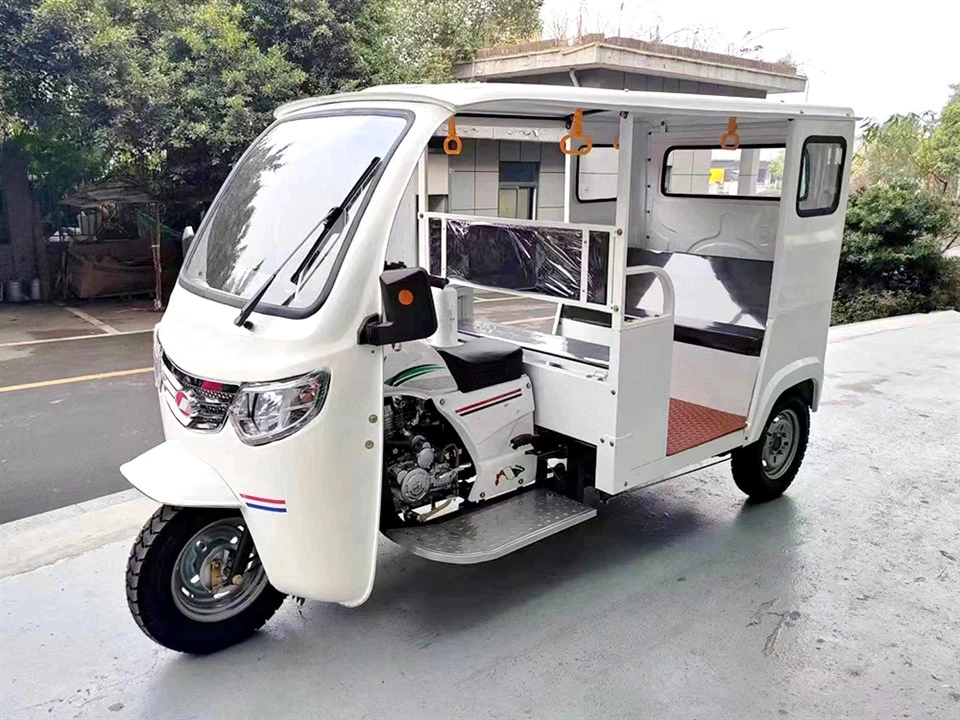
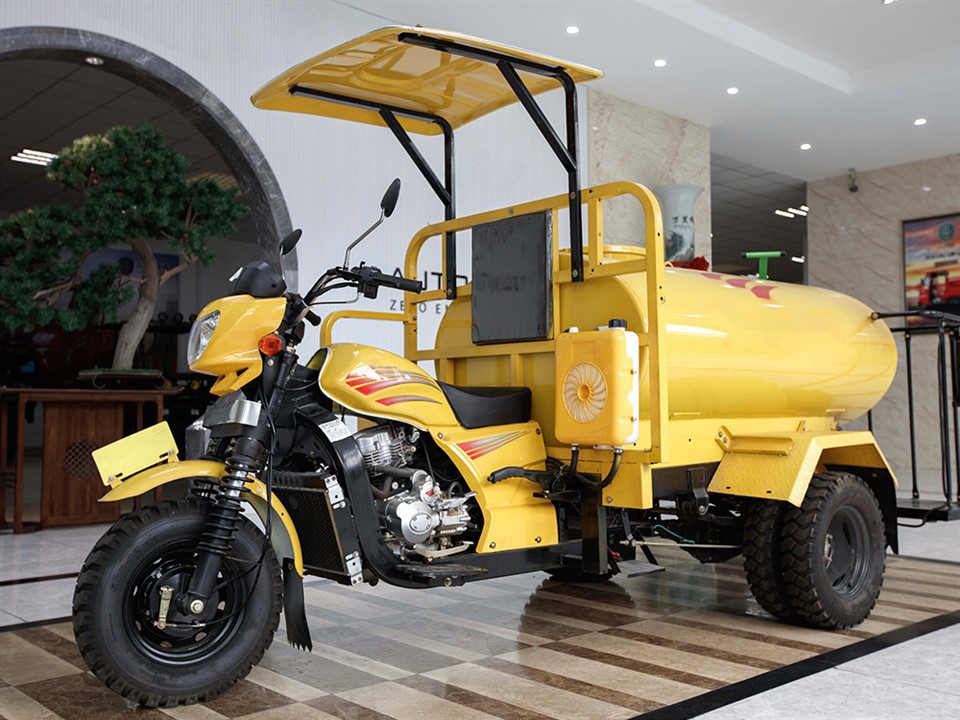
The core advantage of a three-wheeled motorcycle with a cargo hold is that, compared to ordinary freight tricycles, its custom-designed cargo hold features an enclosed or semi-enclosed structure, with a capacity generally ranging from 1.5 to 3 cubic meters. Some models also offer flexible configurations such as compartmentalization and foldable guardrails. This allows for the proper loading of small items such as fruits, vegetables, and daily necessities, as well as the securement of larger items such as appliances and building materials, preventing damage during bumpy transport. Jack, who manages a community fresh produce delivery point, said, "When I used a regular tricycle to deliver groceries in the rain, I had to cover them with layers of tarpaulin, and I was worried about the vegetables getting crushed. Switching to a model with a cargo hold allows us to load 30% more goods at a time, and the enclosed hold also keeps the food fresh, significantly improving delivery efficiency."
Secondly, its economical and practical nature makes it an ideal choice for low-cost transportation. In terms of purchase cost, the price of a cargo three-wheeled motorcycle ranges from $800 to $1500, significantly lower than the tens of thousands of dollars typically charged for a minivan, significantly lowering the barrier to entry for individual entrepreneurs. Furthermore, their 150-250cc engines offer low fuel consumption, consuming only 1-3 liters per 100 kilometers. Maintenance is simple, and parts are affordable, resulting in an average annual maintenance cost of less than 1,000 yuan. Mr. Wang, a rural hardware retailer, did the math: "Using a cargo three-wheeled motorcycle to deliver goods saves me tens of dollars in monthly fuel costs compared to a small truck. This annual savings is substantial, and for small businesses, it represents a substantial profit."
In terms of adaptability, cargo three-wheeled motorcycles demonstrate their versatility. In cities, they can nimbly navigate narrow streets and aging neighborhoods, easily reaching delivery points where trucks struggle to park, thus solving delivery challenges. In rural areas, their sturdy chassis and flexible handling enable them to smoothly transport agricultural supplies to the countryside and produce to the city, even over rugged roads. At markets and for temporary stalls, the cargo compartments of some models can be transformed into "mobile stalls." Deploying the side guardrails allows for displaying goods, eliminating the hassle of setting up a stall and making them popular with small vendors.
Furthermore, technological advancements have significantly improved the safety and comfort of today's cargo-compartment three-wheeled motorcycles. Most models are equipped with hydraulic shock absorbers and vacuum-protected tires for a smoother ride. Some high-end models also feature LED lighting and reversing cameras, enhancing safety during nighttime driving and reversing. Furthermore, ergonomically designed seats and adjustable handlebars make long hours of driving easier, further enhancing the user experience. Industry insiders say that cargo three-wheeled motorcycles, with their multiple advantages of efficiency, economy, and flexibility, precisely meet the needs of the short-distance transportation market. Their market potential is being continuously unleashed, particularly in urban and rural logistics and individual businesses. In the future, with the integration of new energy technologies, electric cargo three-wheeled motorcycles may become a new trend, injecting new impetus into the green development of short-distance transportation.
Based on current market feedback, cargo three-wheeled motorcycles have become a vital means of transportation connecting urban and rural material flows and supporting the development of individual economies. Their "small and beautiful" and "affordable and high-quality" features are allowing more people to experience the convenience and efficiency of short-distance transportation.