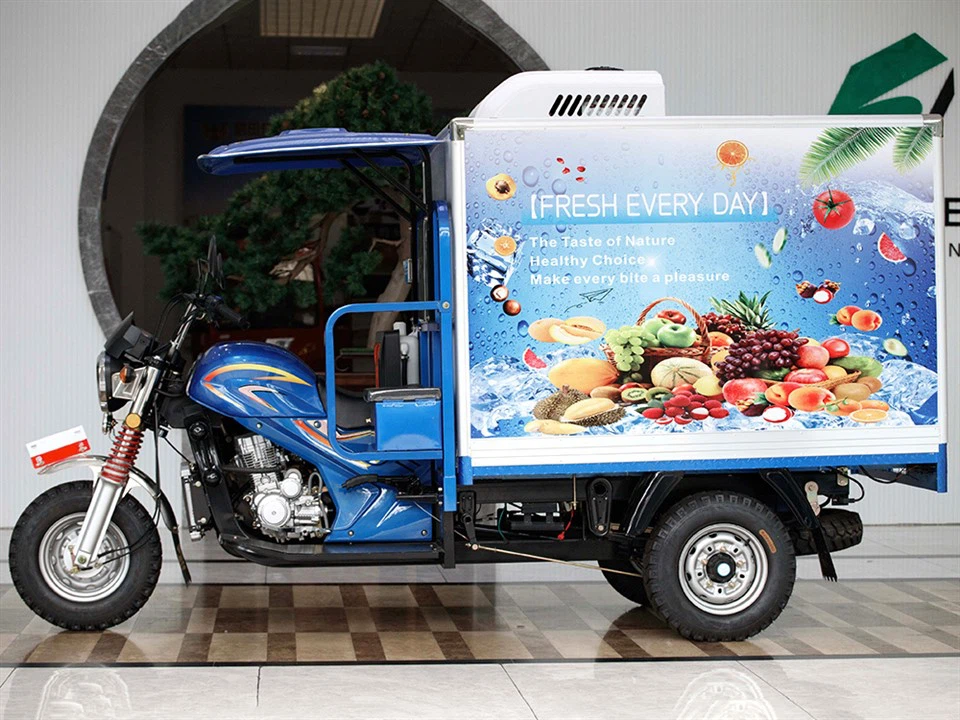
Hey there! I'm a supplier of construction trikes, and I've been in this business for quite a while. Over the years, I've seen firsthand how important safety features are when it comes to these workhorses. So, I thought I'd share my thoughts on what safety features a construction trike should have.
First off, let's talk about brakes. This is a no - brainer. A construction trike needs reliable brakes to stop safely, especially when it's carrying heavy loads. Disc brakes are a great option. They offer better stopping power compared to drum brakes. Disc brakes work by clamping a caliper onto a rotor attached to the wheel. This creates friction, which slows down and stops the trike. In wet or muddy conditions, disc brakes perform much better than drum brakes because they're less likely to get waterlogged and lose their effectiveness.


Another important part of the braking system is the hand - brake. A good hand - brake allows the operator to quickly stop the trike in an emergency. It should be easy to reach and operate, even when the operator is wearing work gloves. Some construction trikes also come with a foot - brake, which can provide additional stopping power and is useful for more controlled braking during normal operation.
Next up is the lighting system. Construction sites can be dimly lit, especially during early morning or late - evening shifts. A construction trike should have bright headlights to illuminate the path ahead. These headlights should be adjustable so that the operator can direct the light where it's needed most. Taillights are also crucial. They make the trike visible to other workers and vehicles on the site. Brake lights are a must - have. When the operator applies the brakes, the brake lights should flash brightly to alert others behind the trike.
Turn signals are often overlooked but are incredibly important. They let other people on the construction site know which way the trike is going to turn. This helps prevent collisions and keeps everyone safe. Some construction trikes even come with hazard lights, which can be used to indicate an emergency or when the trike is stationary in a potentially dangerous location.
Now, let's think about stability. A construction trike is often used to carry heavy and sometimes unevenly distributed loads. To ensure stability, the trike should have a low center of gravity. This means that the heavier components, like the engine and the battery (if it's an electric trike), should be placed as close to the ground as possible.
Wide - set wheels also contribute to stability. They provide a larger base of support, making it less likely for the trike to tip over. Some construction trikes have adjustable wheelbases, which can be useful depending on the type of load being carried. For example, if you're carrying a long and narrow load, you might want to widen the wheelbase for better stability.
The frame of the construction trike is another key factor in safety. It should be made of strong and durable materials, like steel or aluminum. A well - built frame can withstand the rigors of construction work, including bumps, vibrations, and heavy loads. It should also be designed to absorb shocks. Some frames have built - in shock absorbers, which can help reduce the impact on the operator and the load.
Seat belts are an important safety feature that shouldn't be ignored. Just like in a car, a seat belt can keep the operator secure in case of a sudden stop or a collision. It should be adjustable to fit different body sizes and should be easy to fasten and unfasten.
Visibility from the operator's seat is also crucial. The trike should have a clear line of sight in all directions. This might mean having a well - designed windshield that doesn't obstruct the view and mirrors that are properly positioned to show what's behind and to the sides of the trike.
Let's not forget about the cargo area. It should be designed in a way that keeps the load secure. Some construction trikes have tie - down points in the cargo area, which allow the operator to use ropes or straps to secure the load. This prevents the load from shifting during transit, which could cause the trike to become unstable.
Now, I want to introduce you to some of the great products we offer. We have the Heavy Duty Industrial Tricycle, which is built to handle the toughest construction jobs. It comes with all the safety features I've mentioned, and more. Our Three Wheeled Vehicle With Cargo Hold is another great option. It's designed for easy loading and unloading and has excellent stability. And of course, our Construction Trike is a top - choice for construction workers. It combines safety, durability, and performance.
If you're in the market for a construction trike, I encourage you to get in touch. We can discuss your specific needs and find the perfect trike for your construction projects. Whether you're a small construction company or a large industrial firm, we have the right solution for you.
In conclusion, safety should be the top priority when it comes to construction trikes. By ensuring that your trike has the right safety features, you can protect your workers, prevent accidents, and keep your construction projects running smoothly. So, don't compromise on safety. Choose a construction trike that has all the features you need.
References
- Construction Equipment Safety Manuals
- Industry Standards for Tricycle Design and Safety
- Interviews with Construction Workers and Safety Experts