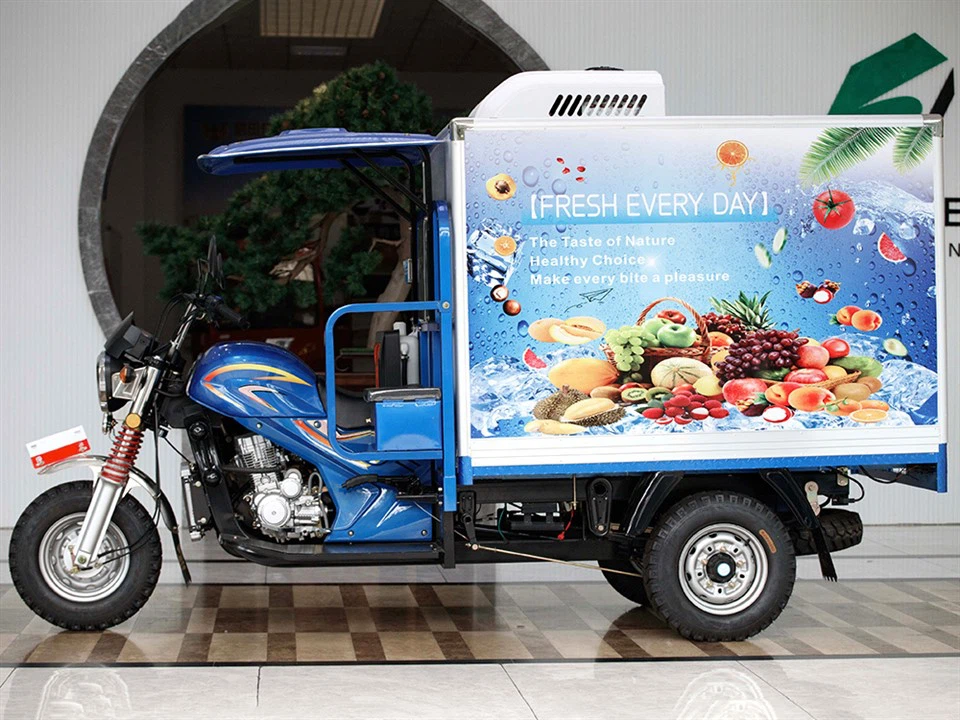
When it comes to water tank tricycles, most people immediately think of their primary function: transporting water. As a supplier of Water Tank Tricycle, I've had numerous customers inquire about the additional loading capacity of these versatile vehicles. In this blog post, I'll delve into the various items that can be carried on a water tank tricycle apart from water, exploring the practicality and potential uses.
Understanding the Structure and Design
Before we discuss what else a water tank tricycle can carry, it's essential to understand its basic structure. A typical water tank tricycle consists of a sturdy frame, three wheels, a water tank, and a power source, usually an electric motor or a small gasoline engine. The water tank is the most prominent feature, but there are other areas on the tricycle that can be utilized for additional storage.
The space around the water tank can be used to secure smaller items. Many water tank tricycles are designed with racks or compartments that can hold tools, spare parts, or other accessories. These areas are often strategically placed to maintain the balance of the tricycle while in motion.
Practical Items for Additional Loading
Cleaning Supplies
One of the most common additional uses for a water tank tricycle is for cleaning purposes. In addition to the water, the tricycle can carry cleaning agents, brushes, mops, and other cleaning tools. This makes it an ideal vehicle for street cleaning, car washing, or even industrial cleaning operations. The water from the tank can be used to wet the surfaces, and the cleaning supplies can be used to scrub and remove dirt and grime.
Gardening Tools
For those involved in gardening or landscaping, a water tank tricycle can be a valuable asset. In addition to watering plants, the tricycle can carry gardening tools such as shovels, rakes, pruning shears, and fertilizers. The water tank can provide a convenient source of water for watering plants, and the additional storage space can keep all the necessary tools organized and easily accessible.
Construction Materials
In construction sites, a water tank tricycle can be used to transport small quantities of construction materials. For example, it can carry bags of cement, sand, or gravel. The water from the tank can be used for mixing concrete or for dust suppression. The tricycle's maneuverability makes it suitable for navigating through narrow spaces on construction sites.


Food and Beverages
In some cases, a water tank tricycle can be converted into a Trike Food Cart. The water tank can be used to store clean water for food preparation and cleaning, while the remaining space can be used to carry food ingredients, cooking equipment, and serving utensils. This type of setup is popular in street food markets and festivals.
Waste Collection
Water tank tricycles can also be used for waste collection. The water can be used to rinse and clean the waste containers, and the additional space can be used to carry small trash bags or recyclable materials. This is especially useful in areas where traditional waste collection vehicles may have difficulty accessing.
Factors Affecting Loading Capacity
The loading capacity of a water tank tricycle in addition to the water depends on several factors. These include the size and design of the tricycle, the weight of the water tank and its contents, and the power of the motor.
Size and Design
Larger water tank tricycles generally have more space for additional loading. Tricycles with a wider frame or more compartments will be able to carry more items. Some tricycles are specifically designed with a modular structure, allowing for easy customization and expansion of the storage space.
Weight of the Water Tank
The weight of the water tank and its contents is a significant factor. A full water tank can be quite heavy, and this will reduce the available loading capacity for other items. It's important to consider the weight distribution when loading the tricycle to ensure safe and stable operation.
Motor Power
The power of the motor determines the tricycle's ability to carry additional weight. A more powerful motor will be able to handle a heavier load without compromising performance. When choosing a water tank tricycle, it's important to select a model with a motor that can handle the expected total weight, including the water and any additional items.
Safety Considerations
When using a water tank tricycle to carry additional items, safety should always be a top priority. Here are some important safety considerations:
- Weight Distribution: Ensure that the weight is evenly distributed across the tricycle to prevent tipping or instability.
- Secure Loading: Use straps, bungee cords, or other securing devices to prevent items from shifting or falling off during transit.
- Visibility: Make sure that the additional items do not obstruct the driver's view or interfere with the operation of the tricycle's controls.
- Overloading: Avoid overloading the tricycle beyond its recommended capacity. This can cause damage to the tricycle and increase the risk of accidents.
Conclusion
In conclusion, a water tank tricycle has a wide range of additional loading capabilities beyond just carrying water. From cleaning supplies and gardening tools to construction materials and food, these versatile vehicles can be customized to meet various needs. As a supplier of Water Tank Tricycle, I'm committed to providing high-quality tricycles that offer both reliability and functionality.
If you're interested in learning more about our water tank tricycles or discussing your specific requirements, I encourage you to reach out for a procurement discussion. We can work together to find the perfect solution for your needs.
References
- General knowledge about water tank tricycles and their applications.
- Industry standards and guidelines for tricycle design and operation.