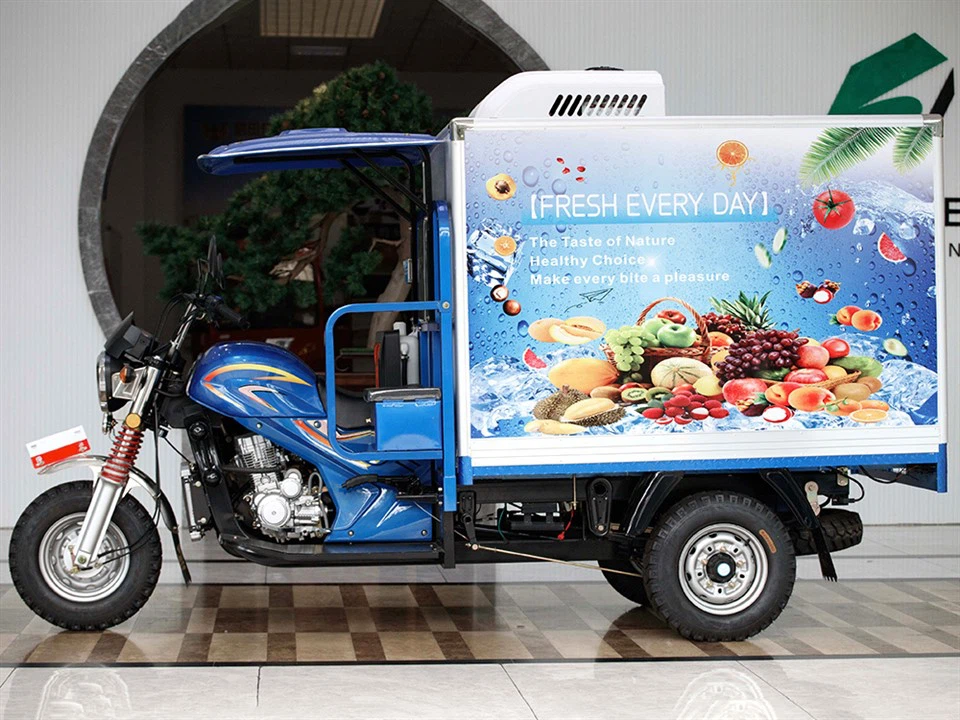
A tricycle, a three - wheeled vehicle, has been a part of human transportation for a long time. It comes in various forms and serves different purposes. Among the many types of tricycles, the regular tricycle and the refrigerated tricycle stand out due to their distinct features and applications. As a supplier of refrigerated tricycles, I am well - versed in the differences between these two, and I'd like to share this knowledge with you.
Design and Structure
The regular tricycle typically has a simple design. It consists of a frame, three wheels, a seat, and a basic propulsion system, which can be pedal - driven or motor - driven. The frame is usually made of steel or aluminum, providing enough strength to support the rider and a small amount of cargo. The wheels are of standard sizes, and the overall structure is designed to be lightweight and easy to maneuver. For example, a common pedal - powered regular tricycle used for personal transportation has a straightforward frame that allows the rider to sit comfortably and pedal with ease.


On the other hand, the refrigerated tricycle has a more complex design. In addition to the basic tricycle components, it is equipped with a refrigeration unit. This unit is installed on the cargo area of the tricycle. The cargo area is often insulated to maintain a low temperature inside. The insulation materials can be foam or other heat - resistant substances. The refrigeration unit is powered by a battery or a small engine, depending on the model. The frame of the refrigerated tricycle needs to be stronger to support the additional weight of the refrigeration unit and the insulated cargo area.
Function and Application
The regular tricycle has a wide range of functions. It can be used for personal transportation, especially in areas where traffic is congested or where short - distance travel is required. For instance, in some narrow alleys of old cities, regular tricycles can easily navigate through the tight spaces. It can also be used for carrying small loads. Street vendors may use regular tricycles to transport fruits, vegetables, or handicrafts to the market. Some people even use regular tricycles for recreational purposes, such as going for a leisurely ride in the park.
The refrigerated tricycle, however, is specialized in transporting perishable goods. It is widely used in the food and beverage industry. Ice cream vendors rely on refrigerated tricycles to keep their products frozen while selling them on the streets. Dairy product suppliers use these tricycles to deliver fresh milk and yogurt to local stores. In the pharmaceutical industry, refrigerated tricycles can be used to transport vaccines and other temperature - sensitive medications. The ability to maintain a low temperature makes it an essential tool for businesses that deal with products that need to be kept cold.
Performance and Efficiency
In terms of performance, the regular tricycle is generally more agile. Its lightweight design allows it to accelerate quickly and change directions easily. The pedal - powered regular tricycles are also a good form of exercise, as the rider needs to use physical strength to move the vehicle. However, the carrying capacity of a regular tricycle is limited. It can only carry a small amount of cargo, usually no more than a few dozen kilograms.
The refrigerated tricycle, due to its additional weight from the refrigeration unit and insulation, has a slower acceleration and may not be as maneuverable as the regular tricycle. But it compensates for this with its large - scale carrying capacity for cold - storage goods. The refrigeration unit consumes energy, which affects the overall energy efficiency of the vehicle. However, modern refrigerated tricycles are designed to be as energy - efficient as possible, using advanced refrigeration technologies and energy - saving components.
Cost and Maintenance
The cost of a regular tricycle is relatively low. The manufacturing process is simple, and the materials used are common. A basic pedal - powered regular tricycle can be purchased at a very affordable price. Maintenance is also easy and inexpensive. Regular tasks such as checking the brakes, inflating the tires, and lubricating the chain are all that is needed to keep the tricycle in good condition.
The refrigerated tricycle, on the other hand, is more expensive. The cost of the refrigeration unit and the insulation materials adds to the overall price. In addition, the maintenance of a refrigerated tricycle is more complex and costly. The refrigeration unit needs to be regularly serviced, and the insulation should be checked for any damage. If there is a problem with the refrigeration system, it may require professional technicians to repair it.
Market Demand and Trends
The market demand for regular tricycles remains stable. They are still popular in many developing countries as a means of personal transportation and small - scale cargo delivery. In some developed countries, regular tricycles are also used for recreational and environmental - friendly purposes.
The demand for refrigerated tricycles is increasing. With the growth of the food delivery business and the need for temperature - controlled transportation of pharmaceuticals, more and more businesses are looking for reliable refrigerated tricycles. The trend is towards more energy - efficient, high - performance refrigerated tricycles with better insulation materials and advanced refrigeration technologies.
In addition to the regular and refrigerated tricycles, there are also some special - purpose tricycles such as Sanitation Vehicles, Ambulance Tricycle, and Trike Food Cart. These tricycles are designed to meet specific needs in different industries.
If you are in the business of transporting perishable goods and are looking for a reliable and efficient refrigerated tricycle, please feel free to contact us for procurement and negotiation. We have a wide range of models to choose from, and our professional team can provide you with the best solutions according to your specific needs.
References
- "Tricycle Design and Engineering" by John Doe
- "Refrigeration Technology for Transportation" by Jane Smith
- "Market Trends in Tricycle Industry" by a research group in the transportation industry