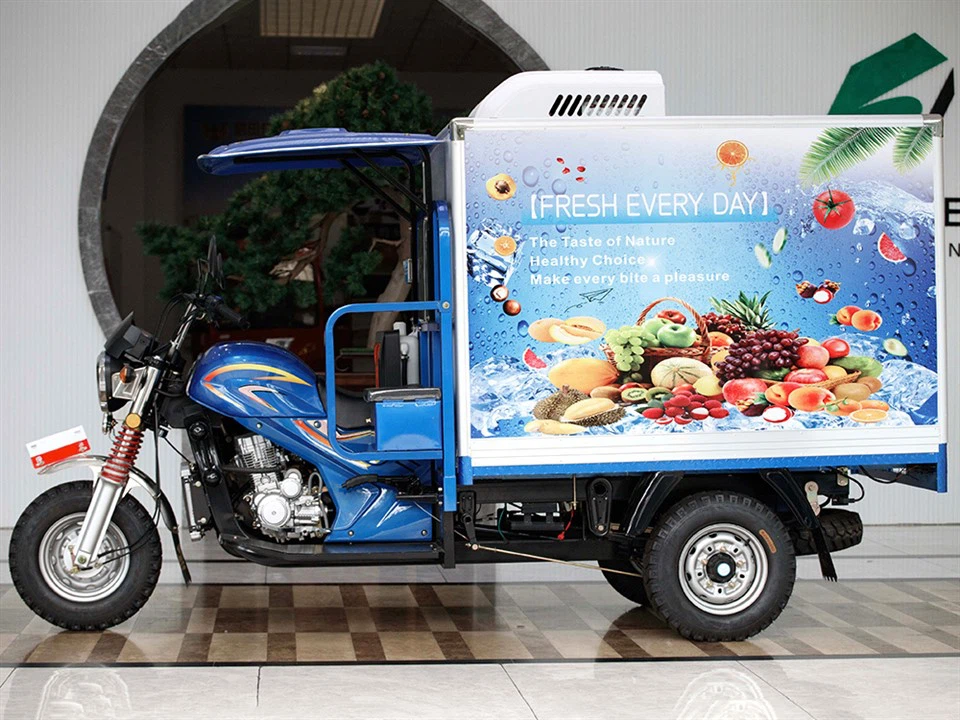
Hey there! I'm a supplier of Passenger Trikes, and today I'm gonna talk about the cooling system of these awesome rides.
First off, why do Passenger Trikes need a cooling system? Well, just like cars or motorcycles, the engines in Passenger Trikes generate a whole lot of heat when they're running. If this heat isn't managed properly, it can cause all sorts of problems. The engine parts can expand too much, leading to poor performance, increased wear and tear, and in the worst - case scenario, engine failure. So, a good cooling system is crucial for keeping the engine running smoothly and ensuring a long lifespan for the trike.
There are mainly two types of cooling systems used in Passenger Trikes: air - cooled and liquid - cooled systems.
Let's start with the air - cooled system. It's a pretty simple setup. The engine has fins on its exterior. These fins increase the surface area of the engine. As the trike moves forward, air rushes over these fins. The heat from the engine is transferred to the air, and the air carries the heat away. It's like when you blow on a hot cup of coffee to cool it down.
One of the big advantages of an air - cooled system is its simplicity. There are fewer parts involved compared to a liquid - cooled system. This means less maintenance and lower costs. You don't have to worry about coolant leaks or a complex radiator system. It's also lighter, which can improve the overall fuel efficiency of the trike.
However, air - cooled systems do have their drawbacks. They're not as efficient as liquid - cooled systems, especially in hot weather or when the engine is under heavy load. The cooling effect depends a lot on the speed of the trike. If you're stuck in traffic or moving at a slow pace, the air flow might not be enough to cool the engine effectively. This can lead to overheating, which can damage the engine.
Now, let's move on to the liquid - cooled system. In a liquid - cooled Passenger Trike, there's a coolant (usually a mixture of water and antifreeze) that circulates through the engine. The coolant absorbs the heat from the engine and then flows to the radiator. The radiator is a device with a bunch of small tubes and fins. As air passes through the radiator, the heat from the coolant is transferred to the air, and the cooled coolant then flows back to the engine to absorb more heat.
The big plus of a liquid - cooled system is its efficiency. It can maintain a more consistent engine temperature, no matter the outside temperature or the load on the engine. This is great for long - distance rides or when you're carrying a heavy load of passengers. It also allows the engine to run at a higher power output without overheating.


But there are some downsides to liquid - cooled systems. They're more complex and expensive. There are more parts that can break, like the water pump, radiator hoses, and the radiator itself. If there's a leak in the coolant system, it can quickly lead to engine overheating. And you have to regularly check and refill the coolant, which adds to the maintenance.
When choosing a Passenger Trike, the type of cooling system is an important factor to consider. If you're mostly riding in cooler climates or on short trips at a steady speed, an air - cooled trike might be a good choice. It's simple, cost - effective, and easy to maintain. On the other hand, if you're planning long - distance rides, carrying heavy loads, or riding in hot weather, a liquid - cooled trike is probably the way to go. It'll keep your engine cool and running smoothly.
At our company, we offer a variety of Passenger Trikes with different cooling systems to meet your needs. For example, we have the Tricycle with Two Seat Passenger. This trike is a great option for those who want to carry a passenger comfortably. It comes with a reliable cooling system, whether it's air - cooled or liquid - cooled, depending on your preference.
We also have the Trike with Passenger Seat. This trike is designed for easy maneuverability and a smooth ride. The cooling system ensures that the engine performs well, even during short city rides or longer outings.
And if you're looking for a trike with a specific passenger seat setup, check out our Tricycle Passenger Seat. It's a great addition to our range of Passenger Trikes, and the cooling system is optimized for the performance of the trike.
If you're interested in our Passenger Trikes, whether it's for personal use or for a business like a tourist service, we'd love to hear from you. We can provide more information about the cooling systems, the features of our trikes, and the best options for your needs. Just reach out to us, and we can start a conversation about your requirements.
In conclusion, understanding the cooling system of a Passenger Trike is crucial for making an informed decision when buying one. Whether you choose an air - cooled or liquid - cooled system, each has its own pros and cons. But with the right choice, you can enjoy a smooth and reliable ride on your Passenger Trike.
References
- Automotive Engineering textbooks on engine cooling systems
- Manufacturer's manuals for Passenger Trikes