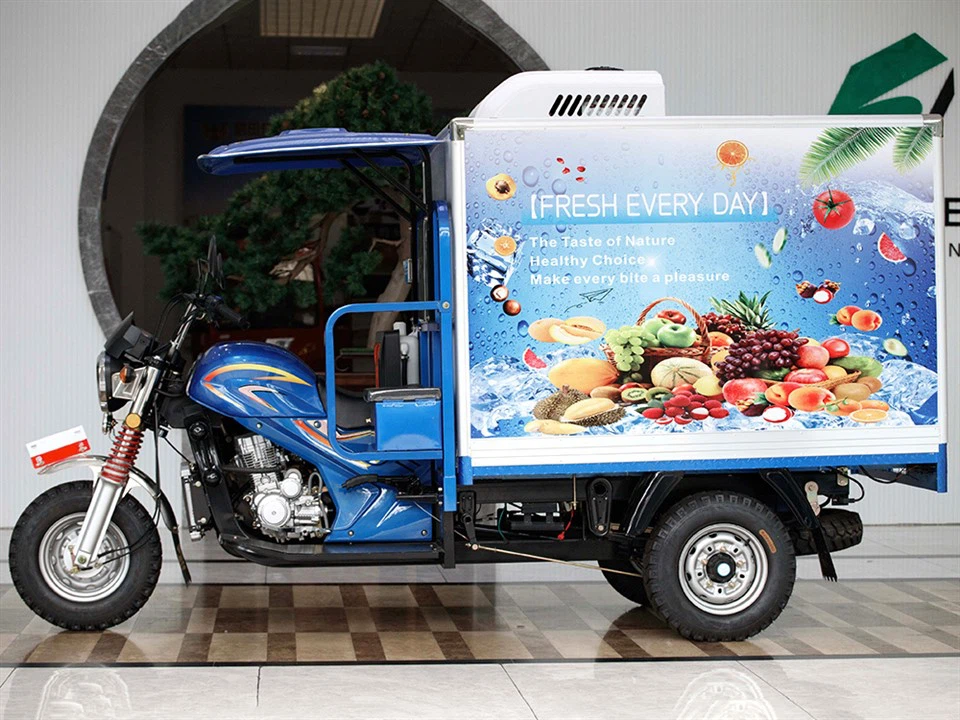
Hey there! As a supplier of gasoline tricycles, I've seen firsthand how crucial the cooling system of a gasoline tricycle engine is. In this blog, I'm gonna break down what the cooling system of a gasoline tricycle engine is, why it's so important, and how it all works.
Why Do We Need a Cooling System?
Let's start with the basics. When a gasoline engine runs, it burns fuel to create power. This combustion process generates a whole lot of heat. If this heat isn't managed properly, it can cause some serious problems. The engine parts can expand too much due to the high temperature, which can lead to poor performance, increased wear and tear, and even engine failure. That's where the cooling system comes in. Its main job is to keep the engine at an optimal operating temperature, usually around 80 - 100 degrees Celsius, depending on the engine design.
Types of Cooling Systems in Gasoline Tricycle Engines
There are two main types of cooling systems used in gasoline tricycle engines: air - cooled and liquid - cooled systems.
Air - Cooled Systems
Air - cooled systems are pretty straightforward. They rely on the flow of air over the engine to dissipate heat. The engine has fins on its cylinders and heads. These fins increase the surface area of the engine, allowing more heat to be transferred to the surrounding air. As the tricycle moves, air rushes over these fins, carrying the heat away.
One of the big advantages of air - cooled systems is their simplicity. They don't have a lot of components like radiators, water pumps, and hoses. This means there are fewer things that can go wrong, and they're generally easier and cheaper to maintain. However, they do have some drawbacks. Air - cooled engines can be noisier because of the increased airflow needed for cooling. Also, they can be less efficient at cooling in hot weather or when the tricycle is operating under heavy loads for long periods.
If you're looking for a reliable gasoline tricycle with an air - cooled engine, you might want to check out our Gasoline Cargo Tricycle. It's designed for practical use and the air - cooled system helps keep it simple and cost - effective.
Liquid - Cooled Systems
Liquid - cooled systems, on the other hand, use a liquid, usually a mixture of water and antifreeze, to absorb and transfer heat away from the engine. The system consists of a radiator, a water pump, a thermostat, and a series of hoses.
The water pump circulates the coolant through the engine block and cylinder head. As the coolant absorbs heat from the engine, it flows to the radiator. The radiator has a large surface area with many small tubes and fins. Air passes through the radiator, cooling the hot coolant. The thermostat regulates the flow of coolant, ensuring that the engine reaches its optimal operating temperature quickly and stays there.
Liquid - cooled engines are generally more efficient at cooling, especially in extreme conditions. They can maintain a more consistent temperature, which is great for performance and engine longevity. However, they are more complex and expensive than air - cooled systems. There's a higher risk of leaks in the hoses or the radiator, and if the coolant level gets too low, it can cause serious engine damage.
Our Heavy Duty Industrial Tricycle comes with a liquid - cooled engine, making it suitable for heavy - duty applications where consistent engine temperature is crucial.
How the Cooling System Works
Let's take a closer look at how a liquid - cooled system operates, as it's a bit more complex.
The Water Pump
The water pump is like the heart of the liquid - cooled system. It's usually driven by a belt or a chain connected to the engine's crankshaft. As the engine runs, the water pump spins, creating pressure that forces the coolant to circulate through the engine. This continuous flow ensures that heat is constantly being removed from the engine.
The Thermostat
The thermostat is a small but important component. It's a valve that controls the flow of coolant. When the engine is cold, the thermostat remains closed, preventing the coolant from flowing to the radiator. This allows the engine to warm up quickly. Once the engine reaches its optimal operating temperature, the thermostat opens, allowing the coolant to flow to the radiator for cooling.
The Radiator
The radiator is where the magic happens. It's a large heat exchanger. As the hot coolant enters the radiator, it flows through a series of small tubes. Air passes over these tubes, absorbing the heat from the coolant. The cooled coolant then flows back to the engine to start the cycle again.
Maintenance of the Cooling System
Proper maintenance of the cooling system is essential for the longevity and performance of the gasoline tricycle engine.
For Air - Cooled Systems
For air - cooled engines, regular cleaning of the fins is crucial. Dirt, dust, and debris can accumulate on the fins over time, reducing their ability to transfer heat. You can use a soft brush or compressed air to clean the fins. Also, make sure the air intake areas are clear so that air can flow freely over the engine.


For Liquid - Cooled Systems
In liquid - cooled systems, you need to check the coolant level regularly. The coolant should be a mixture of water and antifreeze in the correct ratio. You should also inspect the hoses for any signs of wear, cracks, or leaks. The radiator should be kept clean, free from debris that can block the airflow. And don't forget to replace the coolant at the recommended intervals to prevent corrosion and maintain its cooling properties.
Applications and Considerations
Different types of gasoline tricycles have different cooling system requirements. For example, Construction Tricycle used in construction sites often operate under heavy loads and in harsh conditions. A liquid - cooled system might be a better choice for these tricycles as it can handle the high heat generated during long - term heavy - duty use.
On the other hand, for a small - scale delivery tricycle that operates in urban areas with relatively short trips and lighter loads, an air - cooled system could be sufficient and more cost - effective.
Conclusion
In conclusion, the cooling system of a gasoline tricycle engine is a vital part of its operation. Whether it's an air - cooled or liquid - cooled system, each has its own advantages and disadvantages. As a supplier, we offer a range of gasoline tricycles with different cooling systems to meet the diverse needs of our customers.
If you're interested in purchasing a gasoline tricycle or have any questions about the cooling systems, feel free to reach out to us. We're here to help you make the right choice for your specific requirements.
References
- Automotive Engineering textbooks on engine cooling systems
- Manufacturer's manuals for gasoline tricycle engines