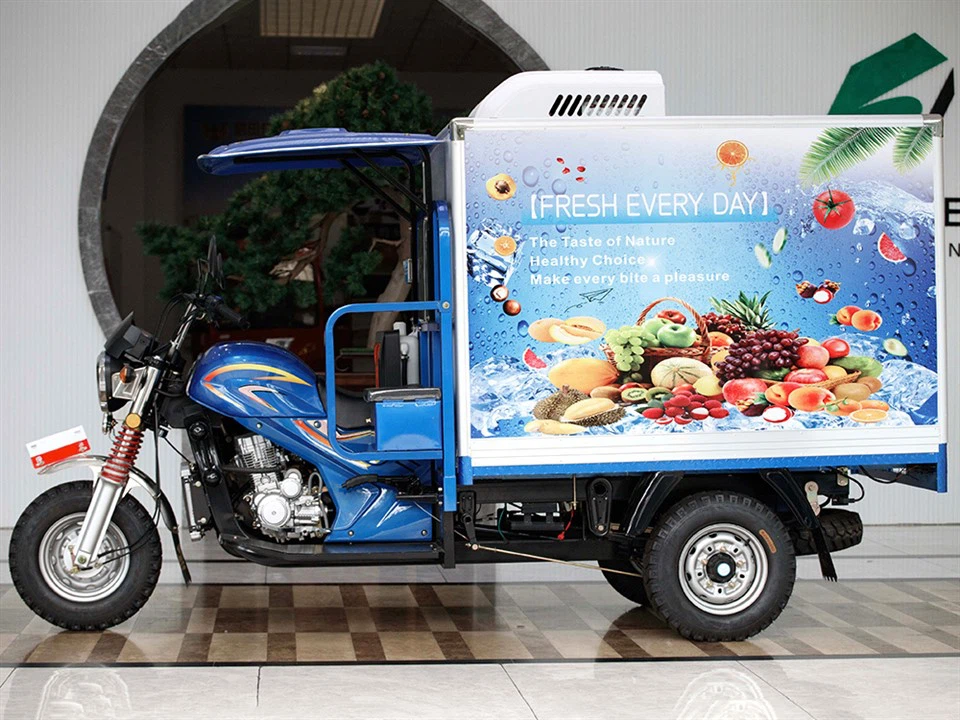
What is the battery life of an electric heavy duty tricycle?
As a supplier of Heavy Duty Tricycles, I often receive inquiries from customers about the battery life of our electric heavy - duty tricycles. Understanding the battery life is crucial for both personal and commercial users, as it directly impacts the vehicle's usability and efficiency.
Factors Affecting Battery Life
First and foremost, the battery capacity is a fundamental factor. Larger capacity batteries generally store more energy, which means they can power the tricycle for a longer distance. For example, a heavy - duty tricycle equipped with a high - capacity lithium - ion battery will typically have a longer range compared to one with a smaller lead - acid battery. Lithium - ion batteries are known for their high energy density, which allows them to store more energy in a smaller and lighter package.
The load on the tricycle also plays a significant role. When the tricycle is carrying a heavy cargo or multiple passengers, the motor has to work harder, consuming more power. This increased power consumption will reduce the battery life. Imagine a Heavy Duty Tricycle used for commercial delivery. If it is fully loaded with packages, the battery will drain faster than when it is empty.
The terrain on which the tricycle operates is another important factor. Riding on flat, smooth roads requires less energy compared to hilly or rough terrains. On hilly roads, the motor has to generate more power to climb the slopes, which leads to increased battery consumption. Similarly, rough terrains with potholes and uneven surfaces can cause the tricycle to use more energy to maintain stability and forward motion.
The speed at which the tricycle is driven also affects the battery life. Higher speeds generally require more power from the motor. If a user drives the electric heavy - duty tricycle at a constant high speed, the battery will discharge more quickly than if they drive at a moderate speed. Additionally, frequent acceleration and deceleration can also increase power consumption, as the motor has to work harder to change the speed.
Battery Life in Real - World Scenarios
In real - world usage, the battery life of an electric heavy - duty tricycle can vary widely. For a typical urban delivery scenario, where the tricycle is used to transport small to medium - sized packages on relatively flat roads, a well - maintained battery with a decent capacity can provide a range of 30 - 50 miles on a single charge. This range is sufficient for many local delivery businesses to complete their daily tasks without the need for frequent recharging.
However, if the tricycle is used in a more demanding environment, such as a rural area with hilly terrains or for transporting heavy construction materials, the range may be significantly reduced. In such cases, the battery life could be as low as 15 - 20 miles per charge.
It's important to note that the battery life also decreases over time. As the battery ages, its ability to hold a charge diminishes. Regular maintenance, such as proper charging and storage, can help slow down this process. For example, avoiding overcharging and deep discharging the battery can extend its lifespan and maintain its performance.
Comparison with Gasoline - Powered Tricycles
When comparing electric heavy - duty tricycles with 150cc Gasoline Tricycle or Motorized Cargo Tricycle, there are some notable differences in terms of range. Gasoline - powered tricycles generally have a longer range, as they can carry a larger amount of fuel and refueling is usually quicker than recharging an electric battery.
However, electric tricycles have their own advantages. They are more environmentally friendly, producing zero emissions during operation. They also have lower operating costs in the long run, as electricity is generally cheaper than gasoline. Additionally, electric tricycles are quieter, which can be an advantage in noise - sensitive areas such as residential neighborhoods or hospitals.
Improving Battery Life
There are several ways to improve the battery life of an electric heavy - duty tricycle. First, users should follow the manufacturer's recommended charging procedures. This usually involves charging the battery at a moderate temperature and avoiding overcharging or leaving the battery in a fully discharged state for an extended period.
Proper tire inflation is also important. Under - inflated tires increase the rolling resistance of the tricycle, which means the motor has to work harder and consume more power. By keeping the tires properly inflated, users can reduce the energy consumption and extend the battery life.
Another way to improve battery life is to optimize the route. Planning a route with fewer hills and less traffic can reduce the power consumption of the tricycle. Additionally, using regenerative braking systems, if available, can help recharge the battery while braking, which can increase the overall range of the tricycle.
Conclusion
The battery life of an electric heavy - duty tricycle is influenced by multiple factors, including battery capacity, load, terrain, speed, and battery age. In real - world scenarios, the range can vary from 15 - 50 miles depending on the usage conditions. While gasoline - powered tricycles may have a longer range, electric tricycles offer environmental and cost - saving benefits.
If you are interested in our Heavy Duty Tricycles and want to learn more about their battery life or other features, or if you are considering purchasing our products for your business or personal use, please feel free to contact us for further discussion. We are committed to providing high - quality tricycles and excellent customer service to meet your needs.


References
- Battery Technology Handbook: A comprehensive guide on battery types, capacities, and performance.
- Electric Vehicle Research Reports: Studies on the performance and efficiency of electric vehicles, including heavy - duty tricycles.
- Industry Standards and Regulations for Electric Tricycles: Information on the requirements and best practices for electric tricycle design and operation.