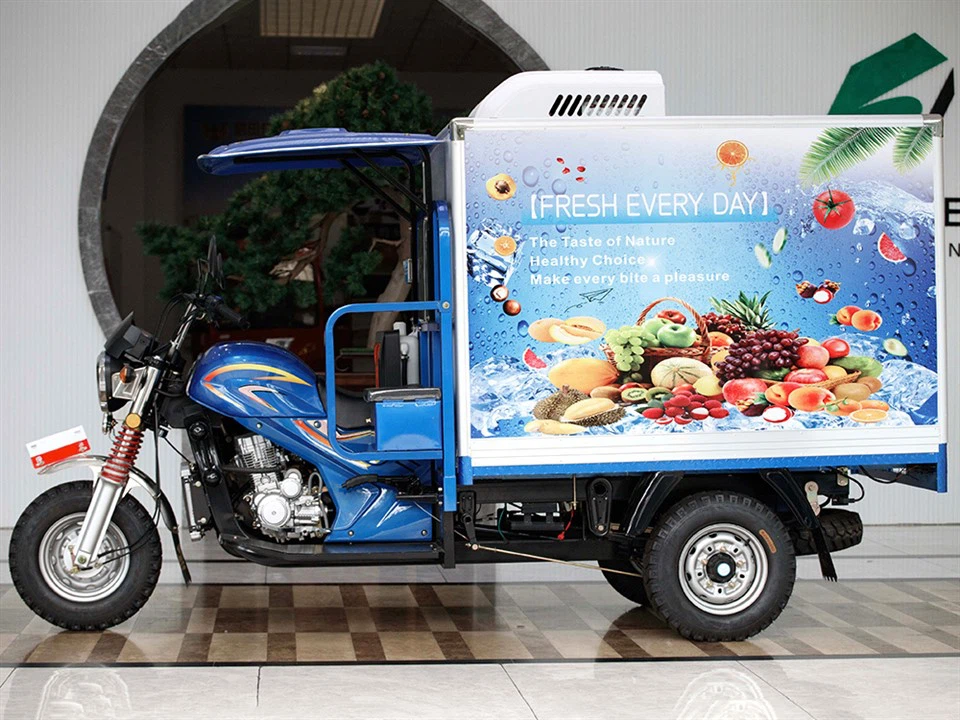
The refrigeration system of a tricycle plays a crucial role in various applications, from transporting perishable goods to medical supplies. As a supplier of Refrigerated Tricycles, I've witnessed firsthand how the refrigeration system can significantly impact the battery life of these vehicles. In this blog post, I'll delve into the relationship between the refrigeration system and battery life, exploring the factors at play and offering insights on how to optimize both.
Understanding the Basics of a Refrigerated Tricycle
Before we dive into the impact of the refrigeration system on battery life, let's first understand the components of a refrigerated tricycle. A typical refrigerated tricycle consists of a tricycle frame, a battery-powered electric motor, and a refrigeration unit. The refrigeration unit is responsible for maintaining a low temperature inside the storage compartment, ensuring that the goods remain fresh and safe during transportation.


The battery is the heart of the tricycle, providing power to both the electric motor and the refrigeration unit. The size and capacity of the battery determine the range and performance of the tricycle, as well as the duration of the refrigeration system's operation.
How the Refrigeration System Affects Battery Life
The refrigeration system is one of the most power-hungry components of a refrigerated tricycle. It requires a continuous supply of electricity to operate the compressor, fans, and other components that maintain the low temperature inside the storage compartment. As a result, the refrigeration system can significantly reduce the battery life of the tricycle.
The amount of power consumed by the refrigeration system depends on several factors, including the size and capacity of the refrigeration unit, the ambient temperature, and the insulation of the storage compartment. Larger refrigeration units and higher ambient temperatures require more power to maintain the desired temperature, which can lead to a faster depletion of the battery.
In addition to the power consumption of the refrigeration system, the cycling of the compressor can also have an impact on the battery life. The compressor in a refrigeration unit cycles on and off to maintain the desired temperature. Each time the compressor starts, it draws a large amount of current from the battery, which can cause a sudden drop in the battery voltage. Over time, these voltage drops can reduce the overall lifespan of the battery.
Factors Affecting the Power Consumption of the Refrigeration System
As mentioned earlier, several factors can affect the power consumption of the refrigeration system. Let's take a closer look at each of these factors:
- Size and Capacity of the Refrigeration Unit: Larger refrigeration units require more power to operate, as they have a higher cooling capacity. When choosing a refrigerated tricycle, it's important to select a refrigeration unit that is appropriately sized for the intended application. A unit that is too large will consume more power than necessary, while a unit that is too small may not be able to maintain the desired temperature.
- Ambient Temperature: The ambient temperature has a significant impact on the power consumption of the refrigeration system. In hot weather, the refrigeration unit has to work harder to maintain the low temperature inside the storage compartment, which requires more power. On the other hand, in cold weather, the refrigeration unit may not need to run as often, which can reduce the power consumption.
- Insulation of the Storage Compartment: The insulation of the storage compartment plays a crucial role in reducing the power consumption of the refrigeration system. A well-insulated compartment can help to maintain the low temperature inside, reducing the amount of work that the refrigeration unit has to do. When choosing a refrigerated tricycle, it's important to look for a model with high-quality insulation.
- Frequency of Door Openings: Each time the door of the storage compartment is opened, warm air enters the compartment, which can cause the temperature to rise. The refrigeration unit then has to work harder to bring the temperature back down, which requires more power. To minimize the impact of door openings on the power consumption of the refrigeration system, it's important to limit the frequency of door openings and to ensure that the door is closed tightly after each use.
Strategies to Optimize Battery Life
While the refrigeration system can have a significant impact on the battery life of a refrigerated tricycle, there are several strategies that can be employed to optimize both the performance of the refrigeration system and the battery life. Here are some tips:
- Choose the Right Refrigeration Unit: As mentioned earlier, it's important to select a refrigeration unit that is appropriately sized for the intended application. A unit that is too large will consume more power than necessary, while a unit that is too small may not be able to maintain the desired temperature.
- Optimize the Insulation: High-quality insulation can help to reduce the power consumption of the refrigeration system by minimizing the heat transfer between the inside and outside of the storage compartment. When choosing a refrigerated tricycle, look for a model with thick insulation and sealed joints.
- Limit the Frequency of Door Openings: As mentioned earlier, each time the door of the storage compartment is opened, warm air enters the compartment, which can cause the temperature to rise. To minimize the impact of door openings on the power consumption of the refrigeration system, limit the frequency of door openings and ensure that the door is closed tightly after each use.
- Use a Battery Management System: A battery management system (BMS) can help to optimize the charging and discharging of the battery, ensuring that it is used efficiently and safely. A BMS can also monitor the battery temperature and voltage, and can shut off the power supply if the battery is overcharged or overheated.
- Plan Your Routes: When planning your routes, try to avoid areas with high traffic or steep hills, as these conditions can increase the power consumption of the electric motor. Instead, choose routes that are relatively flat and have less traffic.
Conclusion
In conclusion, the refrigeration system of a tricycle can have a significant impact on its battery life. By understanding the factors that affect the power consumption of the refrigeration system and by implementing strategies to optimize battery life, you can ensure that your refrigerated tricycle operates efficiently and effectively.
As a supplier of Refrigerated Tricycles, we offer a wide range of models to meet the diverse needs of our customers. Whether you're looking for a Postal Trike for delivering mail or an Ambulance Tricycle for transporting medical supplies, we have the perfect solution for you. We also offer a Fully Enclosed Tricycle that provides additional protection from the elements.
If you're interested in learning more about our Refrigerated Tricycles or if you have any questions about the impact of the refrigeration system on battery life, please don't hesitate to contact us. We're here to help you find the right solution for your needs.
References
- "Principles of Refrigeration" by R. C. Downing
- "Battery Technology Handbook" by Thomas J. Reinhart
- "Electric Vehicle Technology Explained" by John Kelly