Hey there! As a supplier of water tank tricycles, I often get asked whether these nifty vehicles can be used on rough roads. Well, let's dive right into it and explore this question in detail.


First off, let's talk about what a water tank tricycle is. It's a three - wheeled vehicle equipped with a water tank, and it's got a bunch of uses. You'll often see them in places like construction sites for dust suppression, in small communities for water delivery, or even in some agricultural areas for irrigation on a small scale.
Now, when it comes to rough roads, the answer isn't a simple yes or no. There are a few key factors that determine how well a water tank tricycle can handle such terrain.
Design and Build Quality
The design and build of the tricycle play a huge role. A well - constructed water tank tricycle with a sturdy frame can take on a fair amount of abuse. The frame needs to be made of strong materials like high - grade steel. This gives the tricycle the structural integrity to withstand the bumps and jolts of rough roads without falling apart.
The suspension system is another crucial element. A good suspension can absorb the shocks from uneven surfaces, providing a smoother ride for both the tricycle and its precious water cargo. Without proper suspension, the water in the tank could slosh around violently, which not only makes the ride uncomfortable but could also potentially damage the tank or the tricycle itself.
Tires
Tires are like the shoes of the water tank tricycle. They are in direct contact with the road, so their quality and type matter a great deal. For rough roads, you'll want tires with deep treads. These treads help to grip the uneven surface, preventing the tricycle from slipping and sliding.
Off - road or all - terrain tires are often a great choice. They are designed to handle a variety of surfaces, including gravel, mud, and rocky paths. Plus, they're usually thicker and more durable than regular tires, which means they're less likely to get punctured by sharp rocks or debris on the road.
Weight and Balance
The weight of the water tank tricycle, especially when the tank is full, can impact its performance on rough roads. A heavier tricycle might have more stability, but it could also put more strain on the tires and suspension. On the other hand, a lighter tricycle might be more maneuverable but could be more easily tossed around by bumps.
Proper balance is also essential. The water tank should be positioned in a way that distributes the weight evenly across the three wheels. This helps to prevent the tricycle from tipping over on uneven ground.
Advantages of Using Water Tank Tricycles on Rough Roads
There are actually some good reasons why water tank tricycles can be a great choice for rough roads. For one, they are relatively small and maneuverable compared to larger vehicles. This means they can navigate through narrow paths and tight spaces that bigger trucks might not be able to reach.
In some rural or construction areas, where the roads are rough and infrastructure is limited, a water tank tricycle can easily access remote locations to deliver water. It's also more cost - effective to operate than larger vehicles, as it consumes less fuel and requires less maintenance.
Limitations
However, there are also some limitations. The speed at which a water tank tricycle can travel on rough roads is usually quite limited. You can't expect to zip along at high speeds like you would on a smooth highway. The rough terrain slows you down to ensure safety and prevent damage to the vehicle.
The capacity of the water tank might also be a factor. If you need to transport a large amount of water over long distances on rough roads, a water tank tricycle might not be the most efficient option. In these cases, larger trucks might be more suitable.
Real - World Examples
I've had customers who use our water tank tricycles in all sorts of environments. One of them runs a small construction site in a hilly area with lots of unpaved roads. He told me that our tricycle has been a lifesaver. It can easily navigate the rough terrain to deliver water for dust control.
Another customer uses the tricycle for agricultural irrigation in a rural village. The roads there are full of potholes and gravel, but the tricycle manages to get the water to the fields without any major issues.
Related Products
If you're interested in other types of tricycles, we also have some great options. Check out our Trike Food Cart, which is perfect for street food vendors. It's got a unique design that allows for easy mobility on various roads.
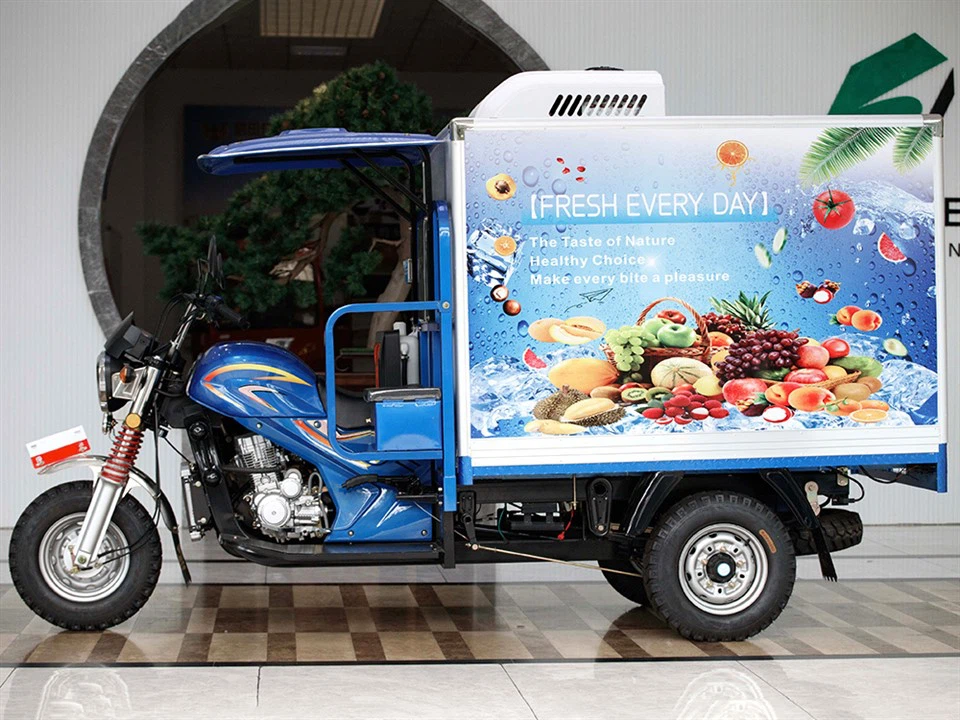
We also offer Sanitation Vehicles that are built to handle different terrains while keeping the environment clean. And for those who need to transport perishable goods, our Refrigerated Tricycle is a great solution.
Conclusion
So, can a water tank tricycle be used on rough roads? The answer is generally yes, as long as it's well - designed, has the right tires, and is properly balanced. While it has its limitations, it also offers many advantages, especially in areas where larger vehicles can't reach.
If you're looking for a reliable water tank tricycle for your rough - road needs, don't hesitate to get in touch. We're here to help you find the perfect solution for your specific requirements. Whether it's for construction, agriculture, or any other application, we've got you covered.
References
- Personal experiences from customers using water tank tricycles on rough roads.
- Industry knowledge on the design and performance of water tank tricycles.