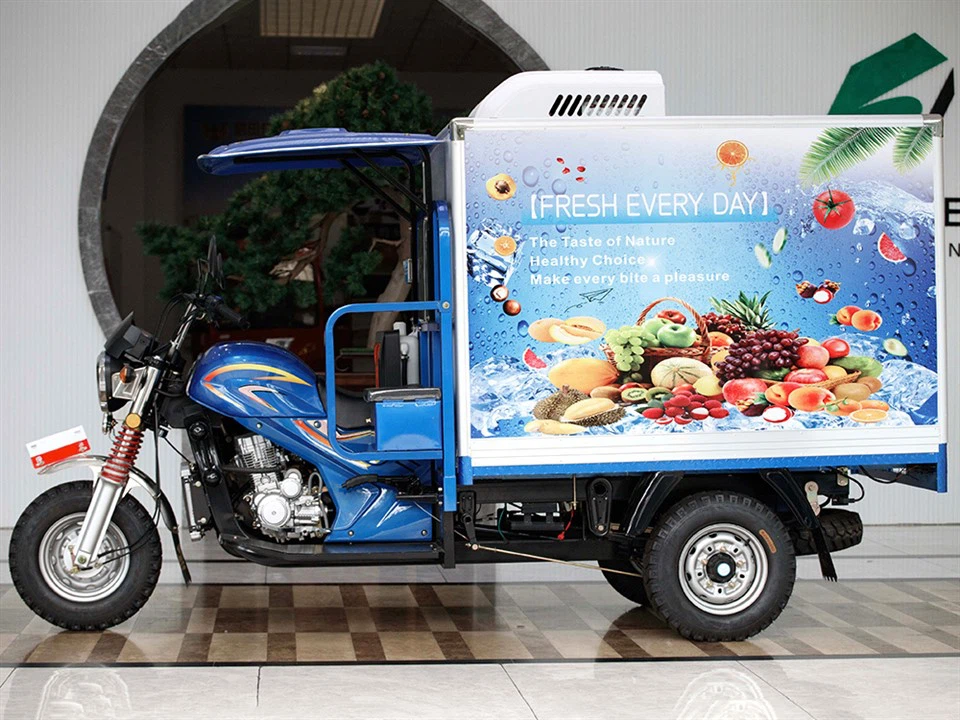
Are gasoline tricycles more expensive to maintain than electric tricycles? That's a question I get asked a lot as a gasoline tricycle supplier. And it's a valid one, especially when you're trying to figure out which type of tricycle is the best fit for your business or personal use. In this blog post, I'll break down the maintenance costs of both gasoline and electric tricycles to help you make an informed decision.
Let's start with gasoline tricycles. As you might expect, the main ongoing cost for a gasoline tricycle is, well, gasoline. The price of gas can fluctuate quite a bit, but on average, you're looking at a decent chunk of change to keep your tricycle running. For example, if you use your tricycle for daily deliveries or commuting, you'll be filling up the tank regularly. And depending on how far you travel and how fuel - efficient your tricycle is, this can add up quickly.
But it's not just the fuel. Gasoline tricycles have more moving parts compared to their electric counterparts. The engine is a complex piece of machinery that requires regular maintenance. You need to change the oil every few thousand miles, just like you would with a car. This means buying oil, oil filters, and paying for the labor if you're not doing it yourself. A typical oil change for a gasoline tricycle can cost anywhere from $20 to $50, depending on the type of oil and the service provider.
Then there are the spark plugs. These need to be replaced periodically to ensure the engine runs smoothly. A set of spark plugs can cost around $10 - $20, and again, you'll need to factor in the cost of installation if you're not a DIYer. The air filter also needs to be cleaned or replaced regularly. A dirty air filter can reduce fuel efficiency and cause the engine to work harder, so it's an important part of maintenance. A new air filter might set you back $10 - $15.
The exhaust system is another area that can require attention. Over time, the muffler and other exhaust components can wear out or develop leaks. Replacing an exhaust part can be quite expensive, sometimes costing over $100. And let's not forget about the transmission. If there are any issues with the gears or the clutch, repairs can be costly and time - consuming.
Now, let's talk about the benefits of gasoline tricycles. They generally have more power and longer range compared to electric tricycles. This makes them a great choice for heavy - duty applications. If you're in the business of transporting heavy loads, a gasoline tricycle like our Delivery Tricycle or Construction Trike can handle the job with ease. They're also better suited for long - distance travel, as you can quickly refuel at a gas station instead of waiting for a battery to charge.
On the other hand, electric tricycles have their own set of maintenance costs. The most significant component of an electric tricycle is the battery. Batteries don't last forever, and when they start to lose their capacity, you'll need to replace them. A good quality battery for an electric tricycle can cost anywhere from $200 to $500. However, the frequency of battery replacement depends on how you use the tricycle. If you're a light user, the battery might last 3 - 5 years. But if you're using the tricycle heavily every day, you might need to replace it sooner.
Charging the battery is also a cost, although it's generally much less than the cost of gasoline. You'll need to plug in your tricycle at home or at a charging station. The cost of electricity varies depending on your location, but it's usually a fraction of what you'd spend on gas.


Electric tricycles have fewer moving parts compared to gasoline tricycles. There's no engine, so you don't have to worry about oil changes, spark plugs, or exhaust systems. The motor is relatively simple and requires less maintenance. You might need to lubricate the chain or check the brakes from time to time, but these are minor tasks. A brake pad replacement for an electric tricycle can cost around $10 - $20, and a chain lubrication is a very inexpensive procedure.
However, electric tricycles do have some limitations. They typically have less power and a shorter range. If you need to carry heavy loads or travel long distances, they might not be the best option. But for short - distance commuting, running errands around town, or light - duty delivery work, an electric tricycle can be a great choice.
So, are gasoline tricycles more expensive to maintain than electric tricycles? It depends on how you use them. If you're using a gasoline tricycle for heavy - duty, long - distance work, the maintenance costs are likely to be higher due to the complex engine and the cost of fuel. But if you're using it sparingly, the costs might not be that much more than an electric tricycle.
If you're in the market for a tricycle and you're still not sure which one is right for you, I'd be happy to have a chat. Whether you're interested in a Heavy Duty Tricycle for your construction business or a delivery tricycle for your local store, we have a range of options to suit your needs. Contact me to discuss your requirements and we can figure out the best tricycle for you and your budget.
References
- General knowledge of tricycle mechanics and industry standards
- Experience as a gasoline tricycle supplier